
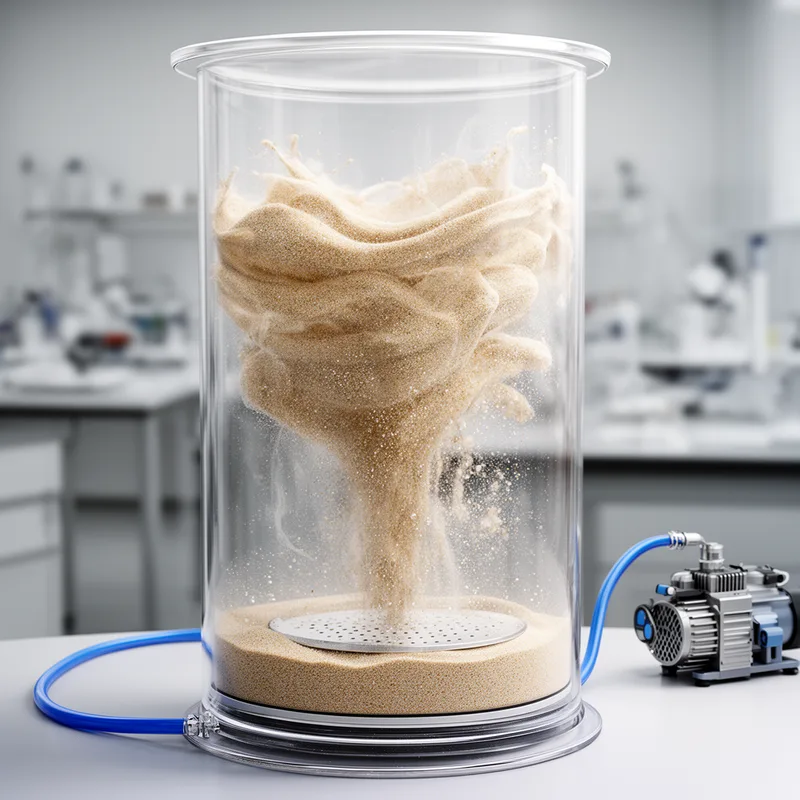
to fluidize


 1
8.3
1
8.3
- verb
- /ˈfluːɪdaɪz/
- Specialized
- The engineer used air to fluidize the solid particles in the chamber, allowing them to flow like a liquid.
- fluidized bed
- fluidized-bed boiler
- fluidized bed combustion
Examples
-
The constantly renewed surface of the fluidized bed provides a greater surface area for treatment than tubes alone would.
Academic text (1996) -
Fluidized bed combustion and gasification are preferred over fixed bed designs due to many inherent advantages.
Academic text (2018) -
CFD simulation of fluidized bed gasification
Academic text (2018) -
In either case, the low operating temperature of fluidized-bed boilers means that effectively no thermal nitrogen oxides are formed.
Academic text (1997) -
The remaining wastewater passes into fixed film reactors called "ecological fluidized beds."
Academic text (1996) -
Advanced PFBC combines the best features of partial coal gasification and fluidized-bed combustion.
Academic text (1994) -
As an experimentalist, he developed new techniques to study combustion dynamics and fluid dynamics in fluidized beds, an increasingly important combustion technology.
Academic text (2002) -
The system includes a pressurized circulating fluidized-bed gasifier, a gas turbine, and a steam turbine.
Academic text (1997) -
To improve the mixing process, they needed to fluidize the materials in the reactor by introducing steam.
-
By fluidizing the powders with gas, they achieved better uniformity during the chemical reaction.
How Fluidized

Surface Forms
Morphology
Etymology
Fluidize comes from fluid meaning 'flow' and the suffix -ize meaning 'make'. In science and industry, to fluidize a solid is to make it act like a liquid by pumping air or water through it so the grains start to 'flow'.