
flotsam and jetsam
 1
7.4
1
7.4

- noun
- /ˈflɒtsəm ənd ˈdʒɛtsəm/
- She's shoving bills and coins and miscellaneous bits of junky flotsam and jetsam.
- other flotsam and jetsam
Examples
-
The room was a pleasant rumble, a boy's paradise strewn throughout with the flotsam and jetsam of 21st century Canadian life.
Academic text (2004) -
Just so much flotsam and jetsam.
-
We can only sort through the flotsam and jetsam and choose what makes the most sense.
Blog text (26) -
With time, however, I was overwhelmed by how much flotsam and jetsam was out there bobbing on the sea of human knowledge.
Fiction book (1998) -
These include buoys, fishing nets and floats, anchor chains, oars, and the other incredible flotsam and jetsam associated with commercial fishing.
Academic text (2009) -
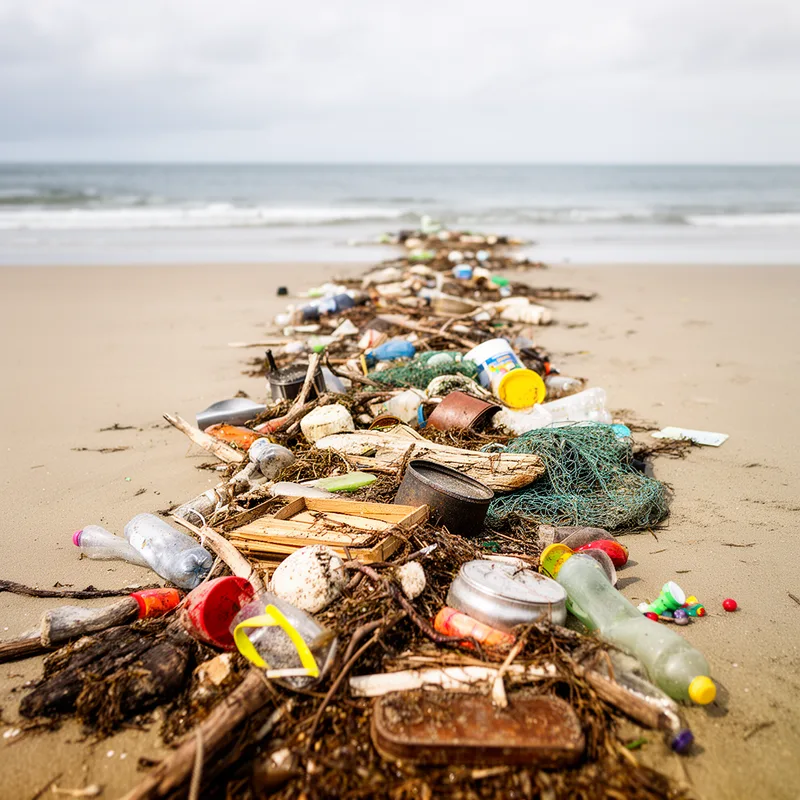
While walking along the shore, I found a variety of flotsam and jetsam, including plastic bottles and old fishing nets.
-
The abandoned lot was filled with flotsam and jetsam, such as broken furniture and discarded toys.
-
As we cleaned the beach, we collected all the flotsam and jetsam that had washed ashore after the storm.
Synonyms
 302
4.1
302
4.1
Scattered broken pieces left after something is destroyed
 41
3.6
41
3.6
Things left around in an untidy way
 9
8.2
9
8.2
Loose bits of waste and broken things left after damage or natural events
 7
8.0
7
8.0
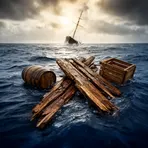
Pieces of a ship or its goods that float after a shipwreck
 3
8.7
3
8.7
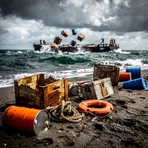
Things that a ship throws into the sea to make the ship lighter, often wash ashore
 1
8.7
1
8.7
Unwanted old things or junk that make a place messy

Small pieces of rubbish left behind in a place

Things people throw away because they are not useful
Antonyms

Surface Forms
Morphology
Both constituents denote types of shipborne debris — 'flotsam' (debris from a sunken ship) and 'jetsam' (items thrown overboard) — and the coordinating 'and' simply groups them. Therefore the overall meaning (unwanted/discarded objects or miscellaneous debris) is directly derivable from the constituent meanings, so a learner who knows the parts would understand the phrase.
Etymology
Flotsam and jetsam comes from old sailors: flotsam was pieces of a broken ship or its load that floated after a wreck, and jetsam were items sailors threw into the sea to save the ship. That's why both words were about bits of trash at sea, and today the phrase means 'unwanted or leftover things'.