
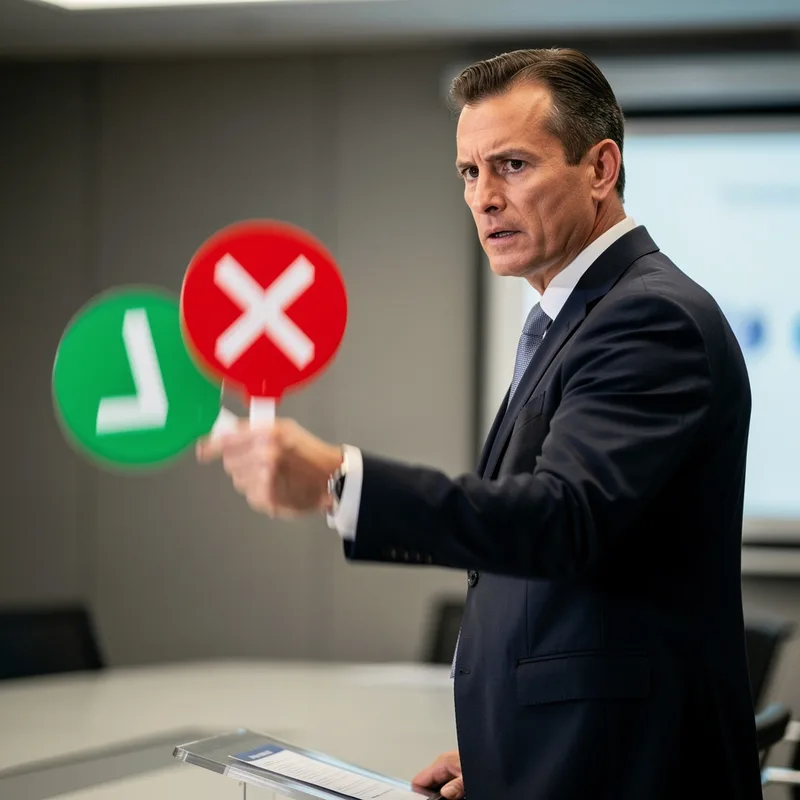
to flip-flop
 23
5.3
23
5.3

- verb
- /ˈflɪpˌflɑp/
- Literature
- During the debate, the senator had to flip-flop on his previous statements about health care reform.
- flip-flop on issues
- flip-flop on positions
- candidate flip-flopped
Loading YouTube…
Watch on YouTubeNow, they could flip flop on that, especially if things get bad.
- Now, they could flip flop on that, especially if things get bad.
- Plus, BP Harris has flip-flopped on yet another issue.
- And then he hits her for flip flopping.
- And I guess that flip flop between off and on, right, between focus and play.
- We hate the character and, and it's just we, we flip flop.
- You know, I, I had to completely flip flop that.
Examples
-
Plus, BP Harris has flip-flopped on yet another issue.
-
His constant flip-flopping causes one's head to spin trying to decipher where he stands.
Blog text (10) -
All these public flip-flops show that he cannot make up his mind.
Blog text (3) -
Now, they could flip flop on that, especially if things get bad.
-
If anything, the problem was that he flip-flopped to every side of the issue for fundraising purposes.
Blog text (2) -
I keep flip-flopping whether to go with the suit or the kimono.
-
Given who he is, his flip-flopping, and his policies, this doesn't come as a surprise.
Blog text (11) -
Mitt Romney has flip-flopped on this issue several times over the past 20 years.
Blog text (8) -
The fact that Romney has flip-flopped about what he stands for is very troubling.
Blog text (2) -
His well-documented record of flip-flops on issues adds to the public's distrust.
Blog text (4)
Synonyms
 811
2.6
811
2.6
Decide to think or act differently from before
 756
2.0
756
2.0
To change one thing or person for another
 81
4.1
81
4.1
To change your mind and accept something you first refused
 15
8.3
15
8.3
To delay giving a clear answer or making a choice
 10
6.5
10
6.5
To try to change a previous statement or position to avoid criticism
 8
8.1
8
8.1
To be unable to decide and keep changing between choices
 8
7.3
8
7.3
Change a plan or policy quickly to follow a different idea
 6
5.1
6
5.1
To show a different opinion after you were against it before
 4
6.8
4
6.8
To completely change your opinion or decision
 4
3.7
4
3.7
Change your mind because someone persuades you or you learn new facts
 3
6.6
3
6.6
To suddenly change your opinion or plan to the opposite
 3
7.4
3
7.4
Change repeatedly between different opinions or choices
 3
6.7
3
6.7
To change your opinion or position completely and suddenly
 1
8.4
1
8.4
To change your feelings or opinion often and without warning


 1
8.2
1
8.2
To change opinions or promises about important matters often without a clear reason

To be unsure and change your mind often

Change opinions often to fit new people or situations

Change which person or group you support for your own benefit

Change a plan or decision so the opposite happens

To have a different opinion after seeing new facts or benefits
Antonyms


How Often

Surface Forms
Morphology
Etymology
Flip-flop as a verb comes from the two words flip and flop, meaning to move quickly one way and then the other. That's why to flip-flop is to suddenly or often change your opinion or decision.