
flavivirus
- noun
- /ˈfleɪvəˌvaɪrəs/
- Specialized
- Thomas, J.C., Chang, S.H., Ricardo, G., & Charles, M.R. (1990). Flavivirus genome organization, expression, and replication. Annual Review of Microbiology, 44, 649-688.
- genus Flavivirus
Examples
-
The tick-borne encephalitis virus is a flavivirus, which belongs to the Flaviviridae family.
Academic text (2011) -
Simons and colleagues have identified two flavivirus-like genomes, GB-A and GB-B, in tamarins after infection with the GB hepatitis agent.
Academic text (1996) -
The good news about that is that Zika is a flavivirus, and we have made vaccines against baby virus, yellow fever.
-
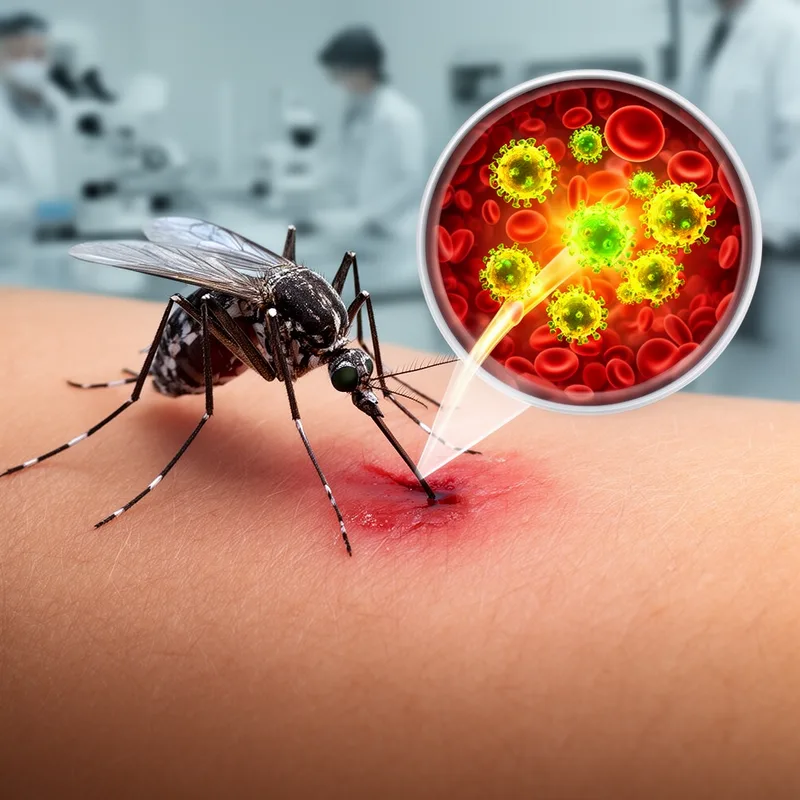
Zika, a serious disease in humans, is caused by a flavivirus that is primarily transmitted by mosquitoes.
-
The flavivirus dengue is responsible for severe flu-like symptoms in infected individuals.
-
Research has shown that the flavivirus family includes pathogens responsible for diseases such as yellow fever and West Nile virus.
Synonyms

 857
3.2
857
3.2

A very small germ that can only live inside cells and often causes illness
 1
3.6
1
3.6
A virus that infects animals, not plants or bacteria
Surface Forms
Morphology
Etymology
Flavivirus comes from the Latin flavus 'yellow' and virus 'poison' or 'germ'. It was named after the Yellow fever virus in this group, so the name is a helpful reminder that this family includes viruses like yellow fever, dengue, and Zika.