

first cranial nerve
- noun
- /fɜrst ˈkreɪniəl nɜrv/
- Specialized
- Damage to the first cranial nerve can result in a loss of the sense of smell.
Examples
-
The doctor tested her first cranial nerve function during the neurological examination.
-
Did you know that the first cranial nerve is also called the olfactory nerve?
-
Injury to the first cranial nerve is rare but may occur following head trauma.
-
The first cranial nerve is essential for detecting odors.
-
Damage to the first cranial nerve can result in a loss of the sense of smell.
-
Injury to the first cranial nerve is rare but may occur following head trauma.
-
The first cranial nerve is essential for detecting odors.
Synonyms


 1
5.8
1
5.8
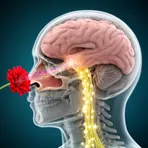
A nerve that carries smell signals from the nose to the brain
Surface Forms
Morphology
The phrase is compositionally built from 'first' (ordinal) + 'cranial' (related to the skull/brain) + 'nerve' (bundle of nerve fibers), so a learner can infer it refers to the first nerve associated with the skull/brain. However, the specific function (the olfactory/smell nerve) relies on anatomical naming conventions and domain knowledge not contained in the constituents, so the meaning is not fully predictable for a B1 learner.
Etymology
The name first cranial nerve shows it is the first nerve that comes from the skull, and 'cranial' means 'from the skull'. It carries smell messages from the nose to the brain, so damage to it causes a loss of the 'sense of smell'.