
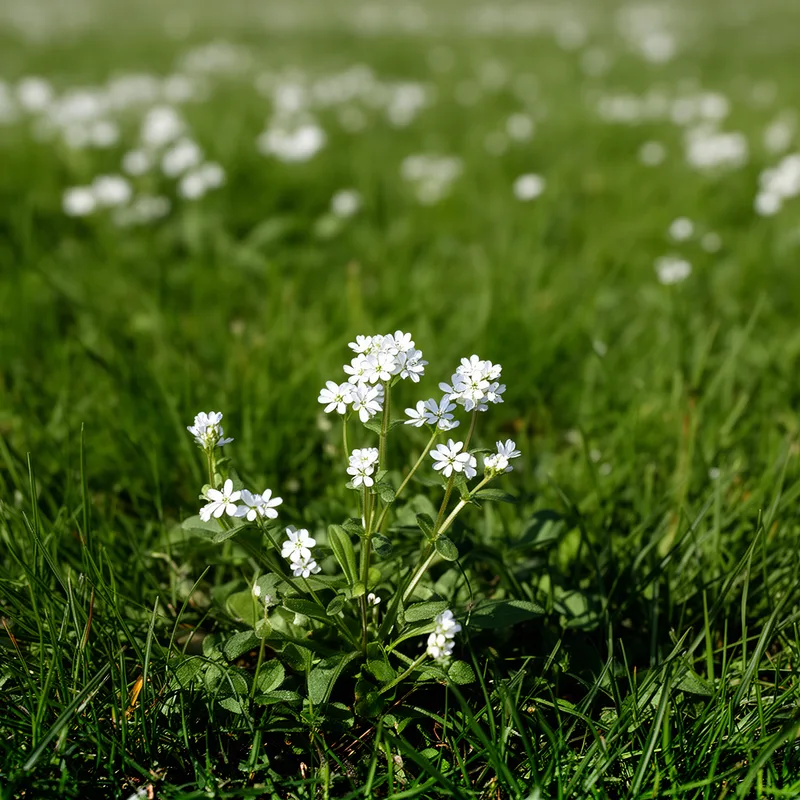
field mouse-ear
- noun
- She identified the delicate white blooms of field mouse-ear during her botanical survey.
Examples
-
The meadows were covered with field mouse-ear, adding a soft texture to the grassland.
-
Conservationists noted a decline in field mouse-ear populations due to habitat changes.
-
The field mouse-ear grows abundantly in the spring.
-
In the garden, I found a patch of field mouse-ear.
-
During our hike, we noticed a vibrant patch of field mouse-ear blooming along the path.
-
The lush green landscape was dotted with field mouse-ear, creating a picturesque scene.
-
Fields of field mouse-ear flourish by the riverbank, attracting various pollinators.
Synonyms

A small wild plant with white flowers that grows in dense groups

A small green plant that grows in thick groups in cool regions and lives for many years
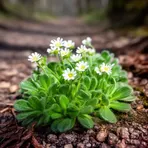
A small plant with white flowers and soft hairy leaves like a mouse ear

A low wild plant with tiny white flowers and soft hairy leaves
Surface Forms
Morphology
field + mouse-ear
The compound is clearly compositional in that 'field' indicates location and 'mouse-ear' transparently suggests something with small, ear-shaped parts (a common naming pattern for plants). However, the precise botanical sense ('a densely tufted perennial chickweed') and the lexicalized compound 'mouse-ear' as a plant name are not fully predictable for a B1 learner, so the relation is partial rather than wholly transparent.
Etymology
Field mouse-ear may come from the tiny, hairy leaves that grow in low clumps in the field and look like a small mouse's ear. So the name describes 'a small, tufted wild plant'.

