
fibroin


 1
9.9
- noun
- /ˈfaɪbroʊɪn/
- Specialized
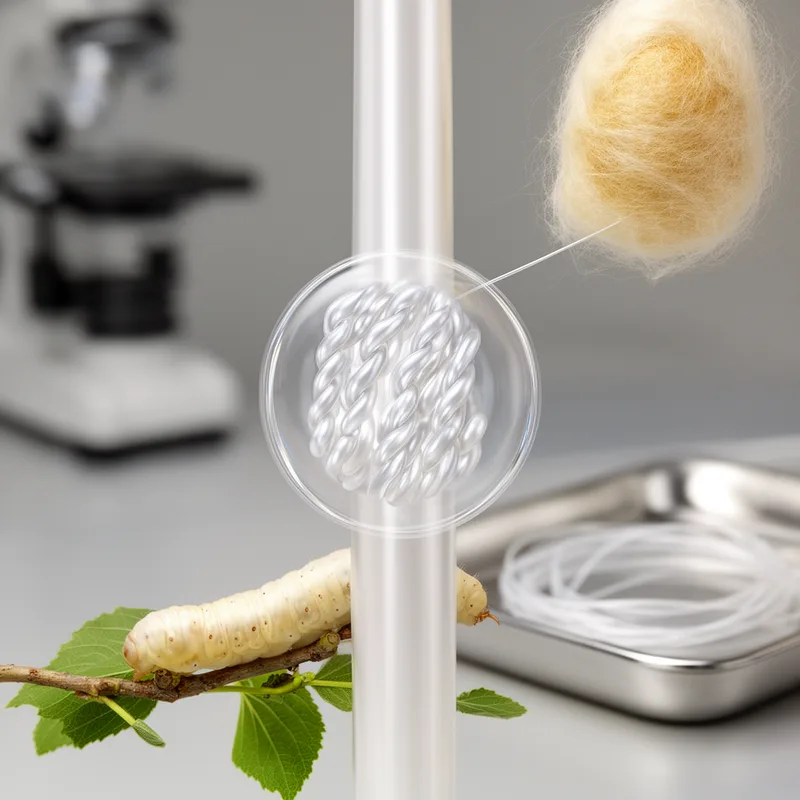
- Silk produced by silkworms contains fibroin, which is essential for its structural quality.
- silk fibroin
- fibroin nanoparticles
- biodegradable silk fibroin
Examples
-
Generally, fibroin has two primary crystalline structures based on their conformation: silk I and silk II.
Academic text (2018) -
Our research could boost the knowledge in fibroin research, especially in nanoparticulate systems.
Academic text (2018) -
To explain this phenomenon, fibroin composition proves its support.
Academic text (2018) -
Consequently, the fibroin structures were strengthened and tightened.
Academic text (2018) -
Preliminary results suggested that the novel particles were more stable and manifested higher drug entrapment efficiency than the fibroin nanoparticles themselves.
Academic text (2018) -
A thorough investigation on the effects of fibroin crystallinity on drug loading, drug release profile, toxicity, and physico-chemical stability is being conducted.
Academic text (2018) -
Among them, drug delivery systems, especially the nanoparticulate ones, have gained much interest due to the excellent properties of fibroin, including biocompatibility, biodegradability, non-toxicity, and preparation flexibility.
Academic text (2018) -
Fibroin is the protein that gives fibroin its strength and elasticity.
-
The artist used fibroin to create a soft and durable textile.
Surface Forms
Morphology
fibroin = fiber (semi-transparent) = fibro + in
Built from fibro- (related to 'fiber') plus the specialized protein-forming suffix '-in', so the link to 'fiber' is clear but the suffix meaning is technical.
Etymology
The word fibroin comes from the part fibro- meaning 'fiber' and the ending -in used for proteins, and it is the same root as the common word fiber. So, fibroin is the protein that makes silk fibers.