
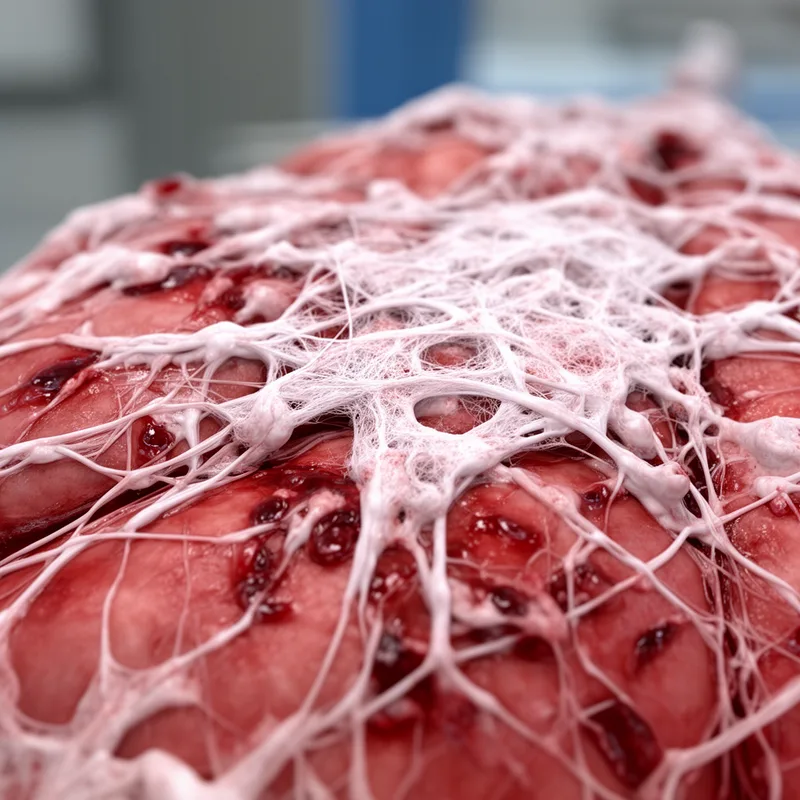
fibrinous
- adjective
- /ˈfaɪbrɪnəs/
- Specialized
- The doctor identified a fibrinous membrane forming over the wound, indicating a healing process.
Examples
-
The surface of the valve, particularly the line of closure, may be covered with fibrinous exudates.
Academic text (2007) -
On examination, he was noted to have extremely poor dentition and a necrotic, fibrinous floor of the mouth with multiple holes in the oral mucosa, which were communicating.
Academic text (2004) -
The presence of fibrinous microthrombi is a distinctive feature that differentiates angiolipomas from other lipomas.
Academic text (2005) -
A fibrinous lining was discovered during the surgery, which explained the patient's prolonged symptoms.
-
The biopsy results showed a fibrinous tissue composition, which is common in cases of chronic inflammation.
Synonyms
Having the look of the protein that makes blood clot in damaged tissue
Surface Forms
Morphology
Etymology
The word fibrinous comes from fibrin, which comes from Latin fibra meaning 'fiber' or 'thread', and is the same idea as the common English word fiber. So, fibrinous describes tissue or fluid that has 'thread-like' or 'stringy' deposits, like the threads that help form a clot.

