
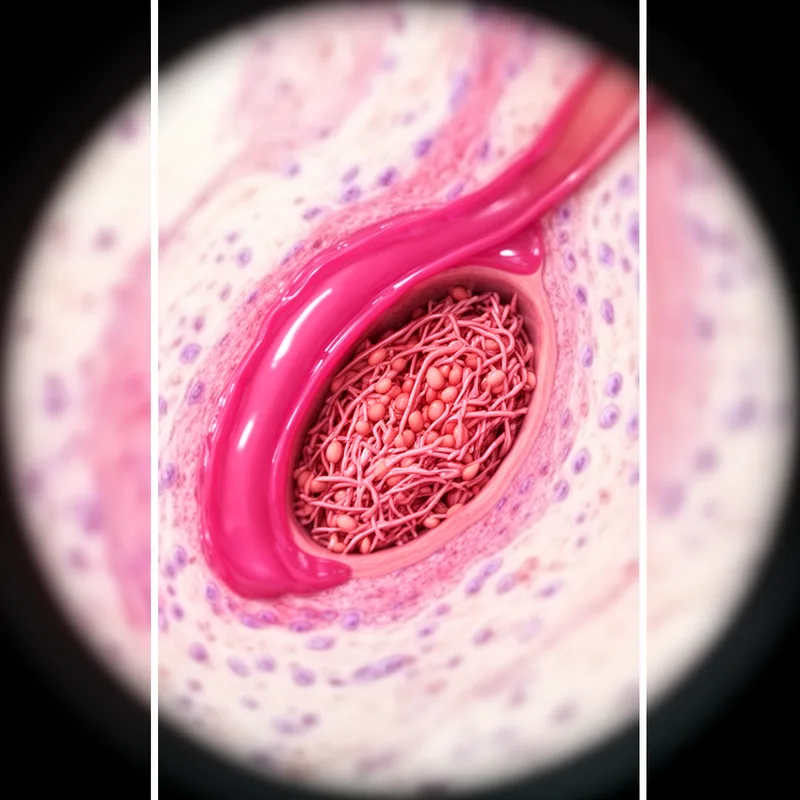
fibrinoid
- adjective
- /ˈfaɪbrɪnɔɪd/
- Specialized
- During the examination, the pathologist identified fibrinoid deposits that resembled fibrin in the diseased tissue.
Examples
-
In all the microscopically examined mitral valve specimens, the basic structural change was collagen fibrinoid degeneration.
Academic text (2007) -
Histopathologic confirmation of Wegener's granulomatosis requires the demonstration of vasculitis, often with fibrinoid vascular necrosis.
Academic text (1996) -
The basic structural change in collagen is fibrinoid degeneration.
Academic text (2007) -
The doctor noted the presence of fibrinoid material in the biopsy results, indicating a possible inflammatory response.
-
The researchers observed fibrinoid changes in the affected areas, which suggested a link to the ongoing inflammation.
Synonyms
Containing a white, stringy material from blood that forms during clotting
Surface Forms
Morphology
Etymology
Fibrinoid comes from fibrin, the thread-like part of a blood clot, and the ending -oid means 'like' or 'resembling', as in humanoid, which means 'like a human'. So, calling tissue fibrinoid means it looks 'like' fibrin.

