
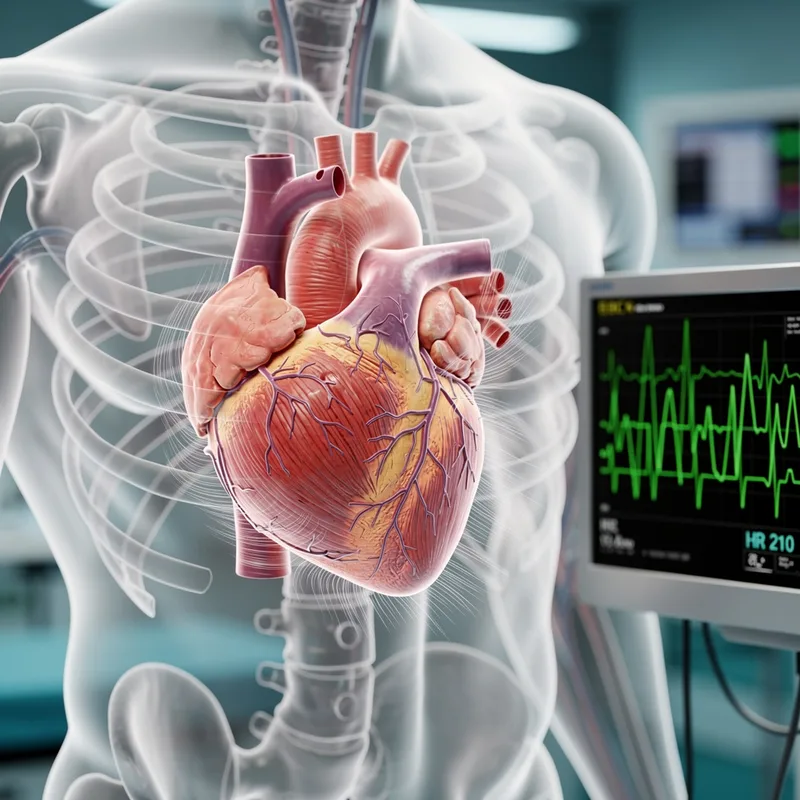
to fibrillate
 4
9.9
4
9.9

- verb
- /ˈfɪbrɪˌleɪt/
- Specialized
- When the doctors checked the monitor, they saw that his heart was fibrillating irregularly.
- fibrillating heart
Examples
-
She's fibrillating.
-
He's fibrillating.
-
He felt his heart fibrillate with joy.
Fiction book (1992) -
I want to know why Halsey's heart fibrillated.
-
Your heart was fibrillating.
-
Her heart, it's fibrillating!
-
I've got to get Clint's heart valve to fibrillate, or we're both goners.
-
- He's still fibrillating.
-
After the accident, his heart began to fibrillate, and he collapsed to the ground.
-
The patient was in distress as his heart continued to fibrillate without any sign of stabilization.
Synonyms
 66
2.8
66
2.8
To make a sudden small movement you cannot control, especially of a body part
 8
4.4
8
4.4
To have the heart beat quickly and unevenly, often from excitement or nervousness
 5
3.4
5
3.4
To make a muscle suddenly tighten without control
 2
4.6
2
4.6
To shake or move quickly because you are nervous


 1
8.4
1
8.4
To shake quickly and unevenly because of a strong feeling or physical reaction
How Twitchy

Surface Forms
Morphology
Etymology
Fibrillate comes from the root fibr- meaning 'fiber', the same root as the common word fiber, and it pictures tiny muscle threads moving. So, when a heart fibrillates, its muscle 'fibers' make quick, irregular twitches.