
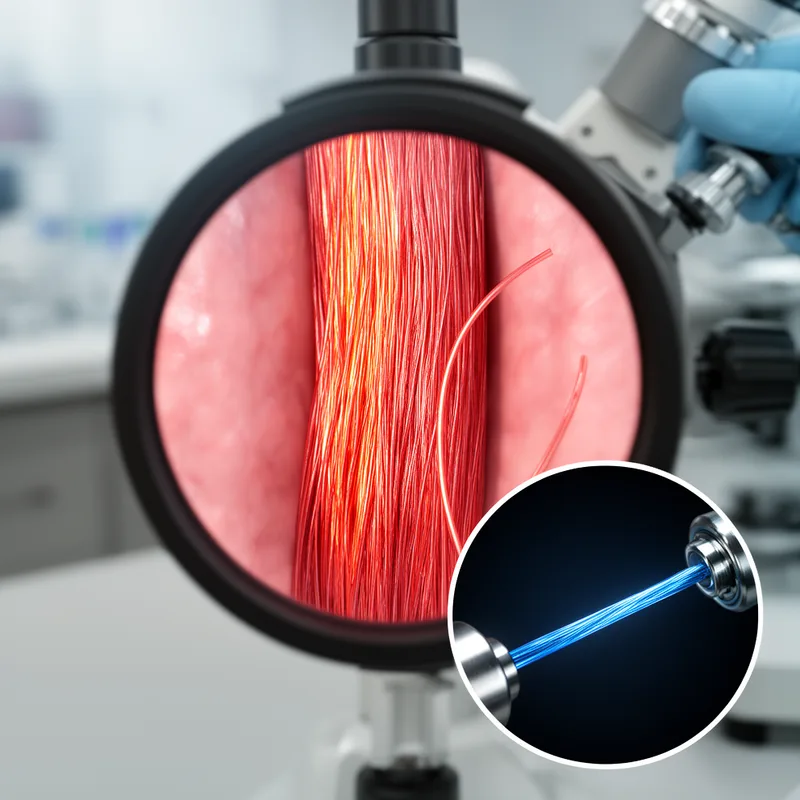
fibril
 1
9.5
1
9.5

- noun
- /ˈfaɪbrɪl/
- Specialized
- Mammalian and avian body skins generally contain relatively sharp unimodal distributions of fibril diameters consistent with a "passive" mechanical role.
- collagen fibrils
- fibril diameter
- amyloid fibrils
Examples
-
Under a microscope, the scientists observed that the fibrils were densely packed, forming a strong matrix.
-
In some cases, fibrils reach about 1 mm in length, which is ten times the initial film thickness.
Academic text (1999) -
Collagen fibril diameter distributions are a function of both the applied stress and its duration.
Academic text (1995) -
Collagen fibril diameters were smallest in those skins bearing compression.
Academic text (1995) -
Amyloidosis is a rare group of diseases characterized by the deposition of amyloid fibrils in soft tissues.
Blog text (6) -
And the cell wall itself is made-up of cellulose fibrils in a matrix of lignin and something called hemicellulose.
-
Collagen fibrils play a crucial role in providing strength and support to various tissues in the body.
-
The formation of silk fibrils in the cocoon gives it its characteristic strength and flexibility.
Synonyms
 58
3.1
58
3.1
A single thin piece of hair or thread
 54
3.7
54
3.7
A long thin cell in the body found in muscle and nerve tissue
 4
5.7
4
5.7
A very thin thread found in cells or silk


 1
6.7
1
6.7
A very thin thread much thinner than a hair used in filters and medical materials

A long thin thread of tissue in animals or plants
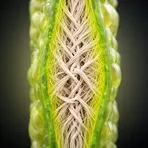
A very small thread that gives support and strength to plants or tissues
How Thin

Surface Forms
Morphology
fibril = fiber (semi-transparent) = fibr + il
Formally a diminutive formation from fiber (fibr- + -il), but the Latin-derived suffix and spelling change make the relation less immediately obvious to learners.
Etymology
The word fibril comes from the Latin root fibra, meaning 'fiber', plus a small ending that makes it 'little'. So a fibril is literally a 'little fiber', just like the common word fiber, and that is why it means a very thin, threadlike strand in tissues or materials.