

fermi


 1
9.9
1
9.9
- noun
- /ˈfɜrmi/
- Specialized
- Scientists often measure atomic nuclei in fermi to describe their extremely small sizes.
Examples
-
The size of the nucleus is typically on the order of one fermi (10^-15 meters).
-
(1 fm = 10^-15 m is called a fermi or a femtometer, according to taste.)
Academic text (2003) -
The nucleon is now understood to be a composite system composed of quarks and gluons, with a spatial size of about one fermi (10^-15 m).
Academic text (2005) -
A typical distance between quarks inside a proton is about 0.84 fermi.
Synonyms
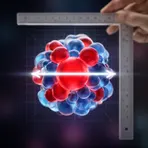
A unit of length equal to one millionth of a millionth of a meter used to measure very small distances
Compounds

- Specialized
A way to describe particles like electrons that cannot share the same energy state
How Long
- UK

- Specialized
140
2.5
- Specialized
2
4.8
- Specialized
7
4.8
- Specialized
- Specialized
1
9.9
Surface Forms
Etymology
Fermi is named after the Italian physicist Enrico Fermi, and it became the name for a very small unit of length used in nuclear physics. One fermi is 'one quadrillionth of a meter, written 10⁻¹⁵ meters', so it's the tiny 'meter' scientists use to measure protons and atomic nuclei.