
Fermi-Dirac statistics
- noun
- /ˈfɜrmi dɪˈræk ˈstætɪstɪks/
- Specialized
- Since fermions such as 3He, with two protons, one neutron, and two electrons, have spin 1/2 and obey Fermi-Dirac statistics, they behave differently.
Examples
-
Scientists use Fermi-Dirac statistics to describe the distribution of particles in low-temperature physics.
-
In quantum mechanics, fermions follow the Fermi-Dirac statistics due to the Pauli exclusion principle.
-
It contained what came to be known as the Fermi-Dirac statistics.
Academic text (1999) -
One type, consisting of the leptons and the quarks, is made up of spin-1/2 particles that obey Fermi-Dirac statistics and hence are called fermions.
Academic text (1997) -
The behavior of electrons in a metal can be explained by the principles of Fermi-Dirac statistics.
Synonyms

 43
4.9
43
4.9

How numbers spread across a set of results, often shown on a graph


 1
5.3
1
5.3
A way to show how often different values occur in data like test scores
Surface Forms
Morphology
Fermi-Dirac + statistics
This term is an eponymous, technical label: 'Fermi-Dirac' refers to specific physicists and encodes specialized quantum-physics meaning that is not inferable from the common noun 'statistics' alone. A B1 learner who knows the ordinary word 'statistics' but not the domain-specific reference or the behavior of fermions would not be able to derive the MWE's meaning, so it is opaque.
Etymology
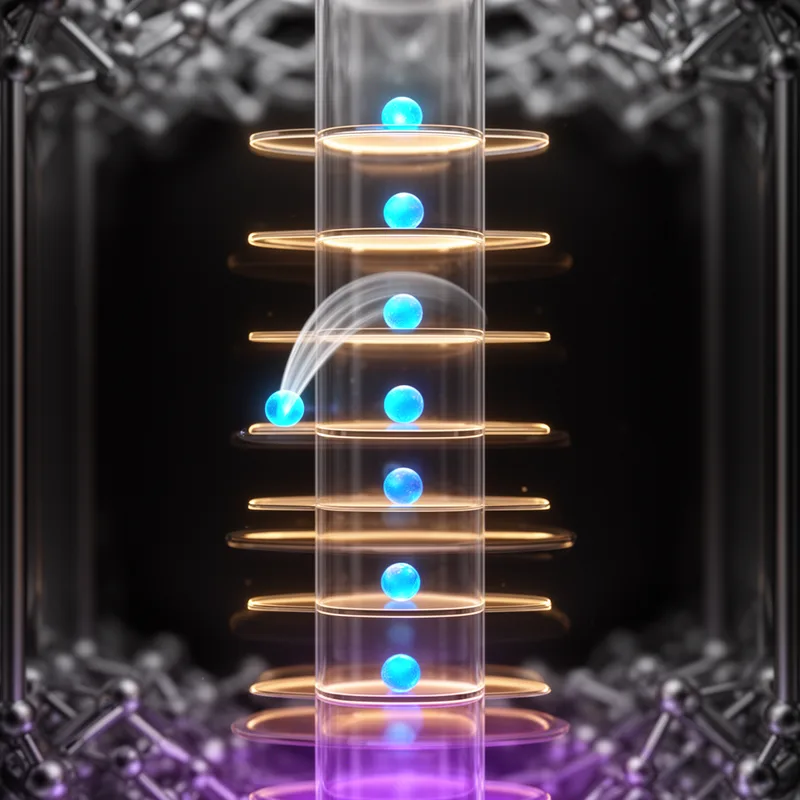
Fermi-Dirac statistics is named for the scientists Fermi and Dirac and uses the image of people taking seats: each 'seat' is like an energy state and each 'person' is like a particle, but only one 'person' may sit in a 'seat'. So, it means the rules for counting and arranging particles that cannot share the same state.