

faveolate
- adjective
- /ˈfeɪviəˌleɪt/
- Specialized
- The faveolate surface of the sea sponge resembles a honeycomb, providing intricate habitats for small sea creatures.
Examples
-
Under the microscope, the ceramic material showed a distinct faveolate texture.
-
The faveolate structure of the coral adds to its unique appearance.
-
Certain types of bone are described as faveolate due to their small, cavity-like spaces.
-
The faveolate structure of the coral is fascinating.
-
Many insects are attracted to faveolate surfaces.
-
Under the microscope, the leaf exhibited a beautiful faveolate pattern, highlighting its unique cell structure.
-
Certain fungi are known for their faveolate caps, which have shallow pits that trap moisture.
Synonyms
 1
4.9
1
4.9

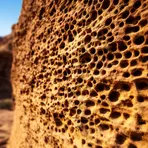
Full of many small holes like those bees make
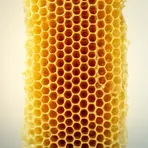
Having small hollow spaces like a honeycomb
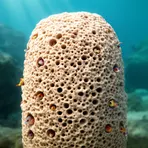
Having many small holes like a honeycomb

Having many small holes on the surface like a honeycomb
How Pitted

Surface Forms
Morphology
faveolate = faveol + ate
The element 'faveol-' is a Latin combining form (not a familiar standalone English base), so an average B1 learner cannot reliably derive the meaning from the parts.
Etymology
Faveolate comes from the Latin root favus, which means 'honeycomb', so picture the small cells in a piece of honeycomb. That's why faveolate describes a surface with many 'small, cell-like cavities'.