

faun
 3
9.9
3
9.9

- noun
- /fɔːn/
- Literature
- The faun was very surprised because fauns have always been able to see people… but you know, very few people ever see them.
- Faun of marble
- House of the Faun
Examples
-
You're the nicest faun I've ever met.
-
And here, first of all, we meet a group of fabulous creatures of the field and forest, unicorns, fauns, Pegasus, the flying horse, and his entire family, the centaurs, those strange creatures that are half-man and half-horse.
-
The House of the Tragic Poet or the House of the Faun.
Fiction book (1998) -
She said she met some faun called Tumnus.
-
You saw the faun?
-
Faun hung expectantly upon her shoulder, head stretched forward, ears cocked, listening.
Fiction book (1992) -
"I am a god, not an errand boy," grumbled the old faun, but he hobbled downstairs nevertheless.
Fiction book (1990) -
In the garden, a faun danced playfully among the flowers, bringing joy to all who passed by.
-
The children were fascinated by the story of the faun, a mythological being who guarded the woods.
-
As the legend goes, a friendly faun appeared to travelers, offering them guidance through the forest.
Synonyms
 5
9.9
5
9.9
A mythical creature with a man's upper body and goat legs, often shown with horns and a tail
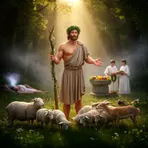
An ancient Roman god of nature, forests, and fertility
Surface Forms
Etymology
Faun comes from the Roman god Faunus, a wild nature spirit of 'forests' and fields who was shown as half man and half goat. The related word fauna ('animals') reminds us this creature is tied to nature, so a faun today is a playful, goat-like being of the woods.