

Faunus
- proper noun
- /ˈfɔːnəs/
- Literature
- In Roman mythology, Faunus is revered as a guardian of nature and a symbol of fertility.
Examples
-
He began his first account by introducing Faunus, the king of the Latins, the inventor of plowing, and the father of lesser fauns, satyrs, pan, and silvans.
Academic text (2001) -
According to ancient texts, Faunus was often depicted with the features of a goat, resembling the Greek god Pan.
-
The festival of Lupercalia is held annually to honor Faunus, the god associated with agriculture and the woods.
Synonyms

 214
7.7
214
7.7

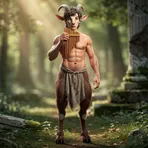
A Greek god of fields and woods who has goat legs and horns
 3
9.9
3
9.9
A creature from Roman myth that looks like a man with goat legs and horns
Surface Forms
Etymology
Faunus is the name of a Roman nature god who protected forests, farm life and animals. His name gave us the English words fauna ('animals') and faun (a half-goat forest creature), so thinking of animals and woods helps you remember his role.