
family Ceratopsidae
- noun
- /ˈfæmɪli ˌsɛrəˈtɒpsɪdi/
- Specialized
 :
familia Ceratopsidae
:
familia Ceratopsidae
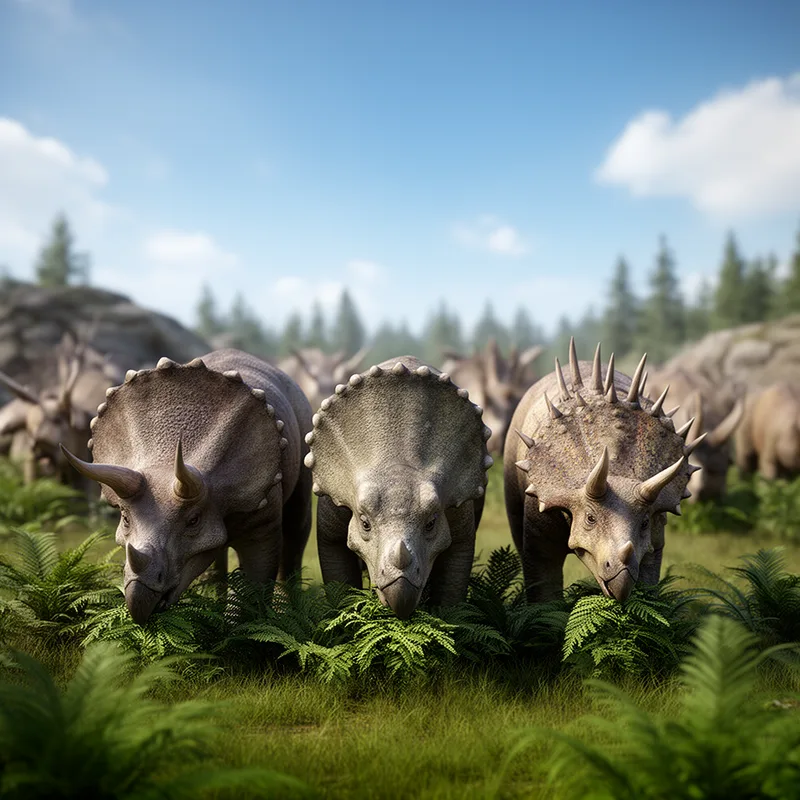
- The large frills and facial horns are characteristic features of dinosaurs in the family Ceratopsidae.
Examples
-
Some of the most famous members of the family Ceratopsidae include Triceratops and Styracosaurus.
-
Paleontologists have discovered many fossils belonging to the family Ceratopsidae in North America.
-
The family Ceratopsidae includes famous dinosaurs like Triceratops.
-
Did you know the family Ceratopsidae thrived in North America?
-
Many fossils from the family Ceratopsidae have been unearthed in North America, revealing their ancient habitat.
-
The distinctive horns and frills of the family Ceratopsidae make these dinosaurs easily recognizable.
-
Dinosaurs in the family Ceratopsidae, such as Triceratops, were predominant herbivores during the Late Cretaceous period.
Synonyms

Large plant-eating dinosaurs with horns and bony frills, like Triceratops
Surface Forms
Morphology
The phrase is compositionally transparent: 'family' indicates a taxonomic rank and 'Ceratopsidae' is the name of that group, so the meaning is directly the scientific grouping of those horned dinosaurs. This follows a regular noun + proper-name pattern used across languages and contains no idiomatic shift, so a B1 learner who knows both constituents will readily understand it.
Etymology
Family Ceratopsidae comes from old Greek: the part ceratops means 'horned face' and the ending -idae marks a 'family', so the name literally means a 'family of horned faces'. That's why the term today refers to the family of horned, plant-eating dinosaurs like Triceratops.

