
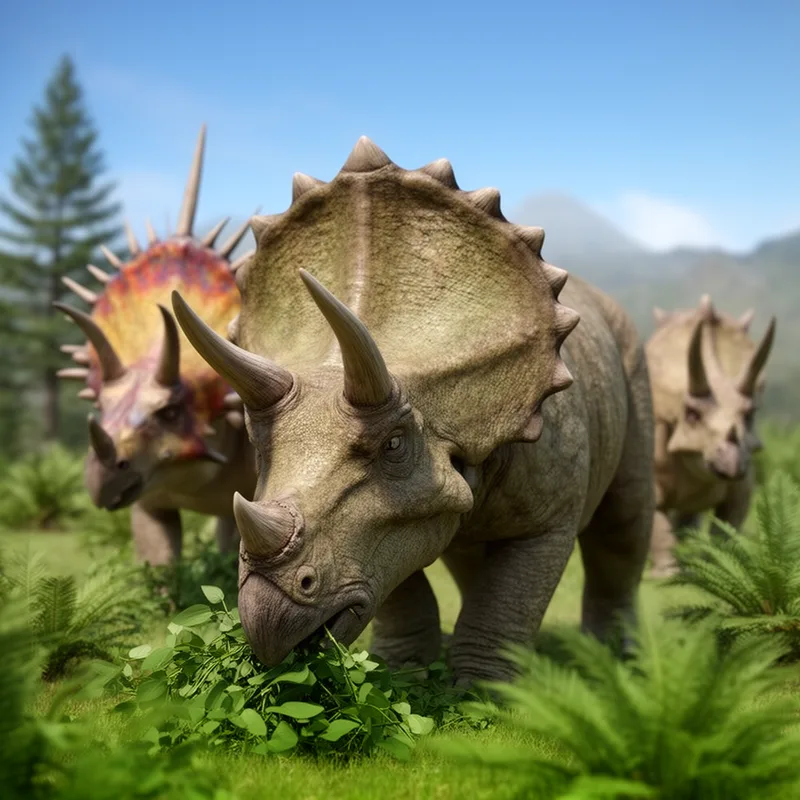
Ceratopsidae
- noun
- /ˌsɛrəˈtɒpsɪˌdeɪ/
- Specialized
 :
Ceratopsidae
:
Ceratopsidae
- The Ceratopsidae family includes some of the most recognizable dinosaurs, such as Triceratops and Styracosaurus.
Examples
-
Members of the Ceratopsidae are known for their elaborate facial horns and frills.
-
Paleontologists discovered new fossils belonging to the Ceratopsidae in North America.
-
The Ceratopsidae family includes famous dinosaurs like Triceratops.
-
Did you know that Ceratopsidae were primarily herbivores?
-
Paleontologists discovered new fossils belonging to the Ceratopsidae in North America.
-
Members of the Ceratopsidae are known for their elaborate facial horns and frills.
-
The Ceratopsidae family includes some of the most recognizable dinosaurs, such as Triceratops and Styracosaurus.
Synonyms

A group of horned plant-eating dinosaurs like Triceratops from ancient North America
Compounds
- Specialized
A group of horned plant-eating dinosaurs like Triceratops from ancient North America
Surface Forms
Morphology
Ceratopsidae = Ceratops (opaque) = ceratops + idae
A technical taxonomic formation (combining form + the family suffix '-idae') that is specialized and unlikely to be transparently interpreted by general learners.
Etymology
Ceratopsidae comes from Greek parts cerat- meaning 'horn' and -ops meaning 'face', and the ending -idae shows a 'family' group. So Ceratopsidae literally means 'horn-faced family', which explains why it names the family of horned dinosaurs like Triceratops.

