
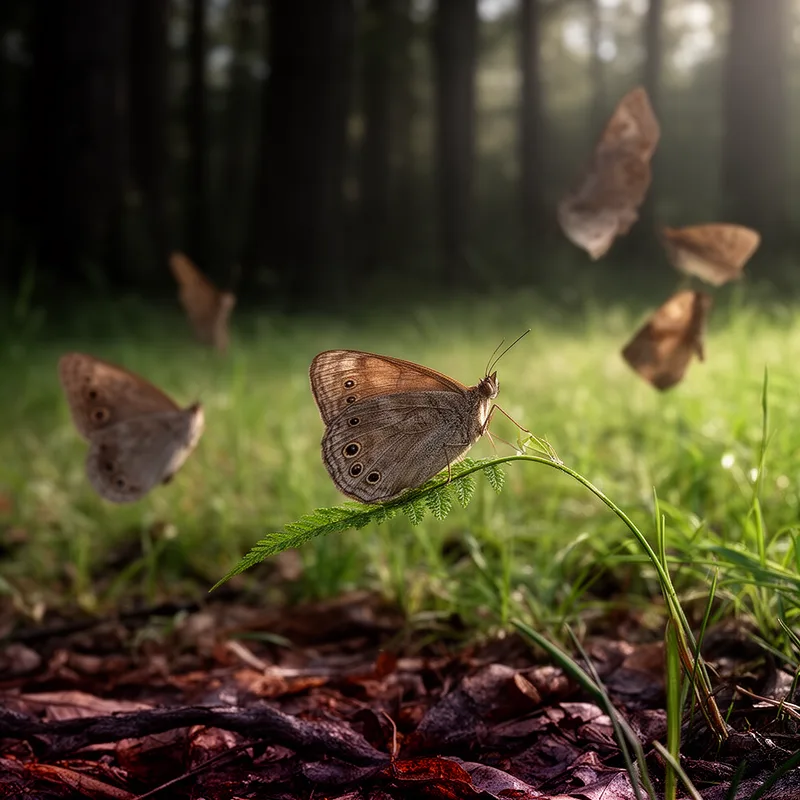
family Satyridae
- noun
- /ˈfæmɪli ˈsætɪrɪdi/
- Specialized
- Researchers observed several members of the family Satyridae at the forest's edge.
Examples
-
Many butterflies in the family Satyridae have brown or muted wing patterns for camouflage.
-
The family Satyridae includes many species adapted to shaded woodland environments.
-
The family Satyridae is known for its beautiful wings.
-
Many species from the family Satyridae thrive in shaded areas.
-
Many butterflies in the family Satyridae have brown or muted wing patterns for camouflage.
-
Researchers observed several members of the family Satyridae at the forest's edge.
-
The family Satyridae includes many species that are commonly found in grassy, shaded areas.
Synonyms
A group of brown butterflies with eye spots that live near the edges of woods
How Large


Surface Forms
Morphology
The phrase is fully compositional: 'family' denotes a taxonomic grouping and 'Satyridae' is the name of a butterfly group, so the overall meaning is directly derived from the constituents. It is a scientific label rather than an idiomatic phrase, and similar taxonomic constructions exist cross-linguistically, so a B1 learner who knows both words would understand it.
Etymology
Family Satyridae may come from the old word satyr, a forest creature from stories. Many of these butterflies are brown and live at the edge of the woods, so the image of a shy satyr hiding among leaves helps you remember they are 'woodland' butterflies.