
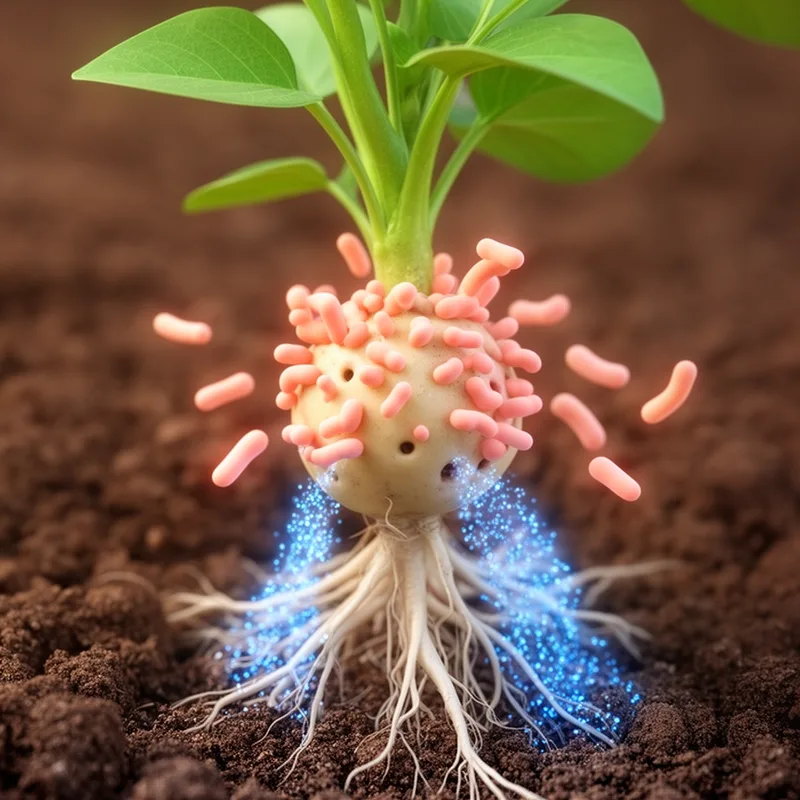
family Rhizobiaceae
- noun
- Specialized
- Many plants depend on the family Rhizobiaceae for nitrogen.
Examples
-
The family Rhizobiaceae plays a crucial role in agriculture.
-
Scientists discovered a new strain belonging to the family Rhizobiaceae in the soil sample.
-
Certain species in the family Rhizobiaceae are notable for their role in root nodule formation in legumes.
-
Research on the family Rhizobiaceae has enhanced our understanding of symbiotic nitrogen fixation.
-
Certain species in the family Rhizobiaceae are notable for their role in root nodule formation in legumes.
-
Research on the family Rhizobiaceae has enhanced our understanding of symbiotic nitrogen fixation.
-
Scientists discovered a new strain belonging to the family Rhizobiaceae in the soil sample.
Synonyms



 1
9.9
A group of bacteria that live in soil and help some plants get nitrogen from the air
Surface Forms
Morphology
The phrase is a straightforward taxonomic noun phrase: 'family' (a scientific grouping) combined with the proper name 'Rhizobiaceae' (a bacterial family). A learner who knows both constituents can directly infer it refers to the taxonomic group of bacteria called Rhizobiaceae; this compositional pattern (family + name) is common across languages and not idiomatic.
Etymology
Family Rhizobiaceae comes from the parts rhizo meaning 'root' and bio meaning 'life'. These are tiny bacteria that live by plant roots and help plants get nitrogen, so the name reminds you they are a 'family' or group of root bacteria.