
Rhizobiaceae


 1
9.9
- noun
- /raɪˈzoʊbiˌeɪsiː/
- Specialized
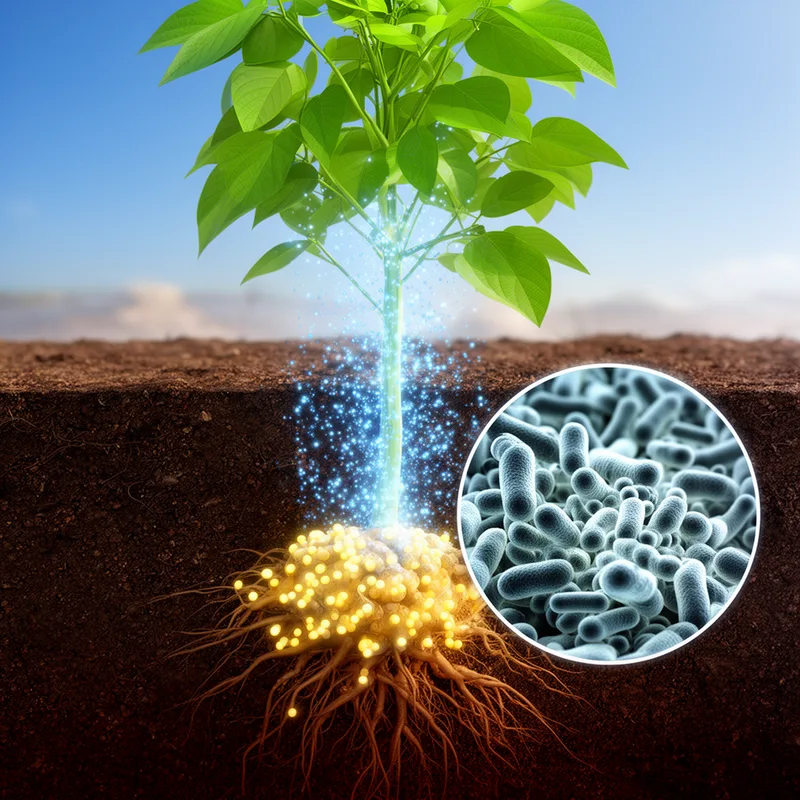
- Some members of the Rhizobiaceae family are essential for nitrogen-fixing symbiosis in legumes.
Examples
-
The soil sample contained several species belonging to the Rhizobiaceae.
-
Scientists have studied Rhizobiaceae to better understand their role in agriculture.
-
The family Rhizobiaceae plays a crucial role in agriculture.
-
Many plants depend on Rhizobiaceae for nitrogen fixation.
-
The Rhizobiaceae family includes important bacteria that help plants absorb nitrogen from the soil.
-
Many legumes form symbiotic relationships with Rhizobiaceae to enhance their nitrogen fixation capabilities.
-
Researchers study Rhizobiaceae to understand their role in sustainable agriculture and soil health.
Synonyms

Small family of rod-shaped bacteria that includes species helping plants get nitrogen from soil
Compounds
- Specialized
Small family of rod-shaped bacteria that includes species helping plants get nitrogen from soil
Surface Forms
Morphology
Rhizobiaceae = Rhizobium (opaque) = Rhizobium + aceae
The form is a standard taxonomic formation (genus stem + -aceae) and is a specialist scientific name, so its meaning is not derivable by an average B1 learner from the parts.
Etymology
Rhizobiaceae comes from Greek parts rhizo- meaning 'root' and bios meaning 'life', plus the family ending -aceae used for naming groups of organisms. So Rhizobiaceae are 'root-living' bacteria, which helps explain why many of them live in plant roots and help with nitrogen.