
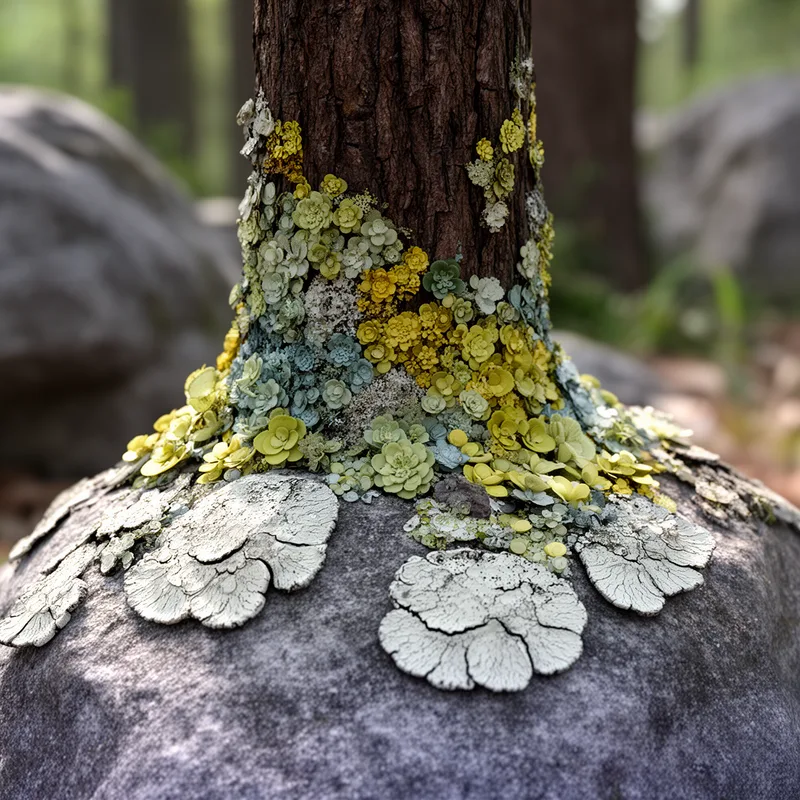
family Lecanoraceae
- noun
- /ˈfæmɪli lɛkəˈnɔːrəsɪ/
- Specialized
- The family Lecanoraceae includes many species of lichens.
Examples
-
The family Lecanoraceae includes many widely distributed lichen species.
-
Some members of the family Lecanoraceae are important in ecological monitoring.
-
Biologists have studied the family Lecanoraceae to better understand environmental indicators.
-
Some members of the family Lecanoraceae are very colorful.
-
The family Lecanoraceae includes many widely distributed lichen species, making it essential for studying biodiversity.
-
Some members of the family Lecanoraceae are important in ecological monitoring due to their sensitivity to pollution.
-
Biologists have studied the family Lecanoraceae to better understand their role in various ecosystems.
Synonyms
A family of lichens with small disc-shaped parts that make spores
Surface Forms
Morphology
The phrase simply names the taxonomic family called Lecanoraceae, so its meaning is directly derived from combining 'family' (a scientific grouping) with the taxon name. This 'family + [taxon]' pattern is a regular, cross-linguistic naming convention in biology and follows normal English composition, making it immediately comprehensible to learners who know both words.
Etymology
Family Lecanoraceae gets its name from an old Greek word meaning 'small dish', because many of these lichens have little cup-shaped parts on their surface. So the name helps you remember this family as a group of lichens often with small cup shapes.

