
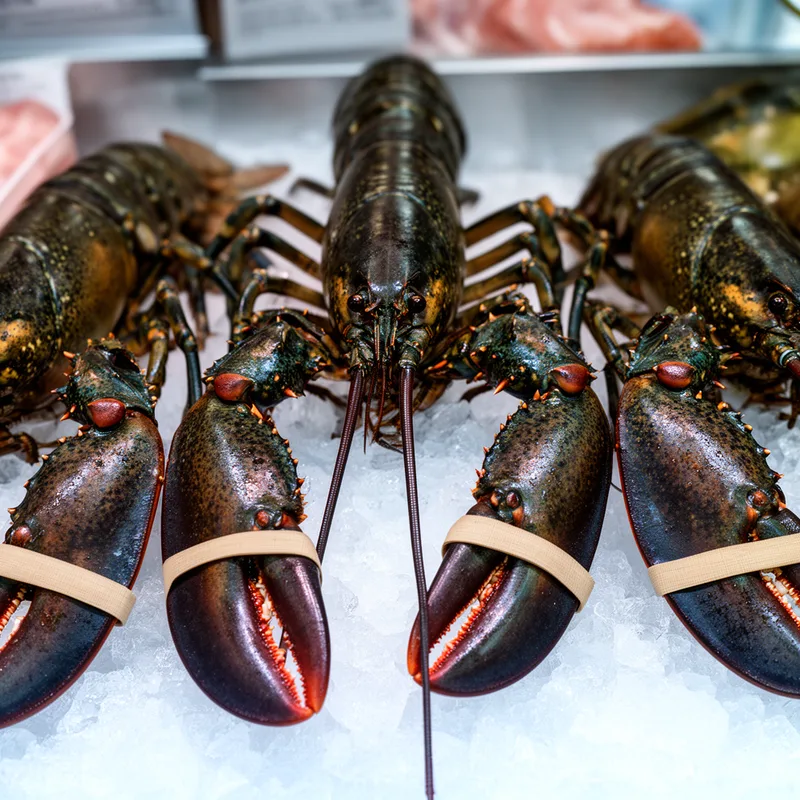
family Homaridae
- noun
- /ˈfæmɪli hoʊˈmɛrɪdeɪ/
- Specialized
- The family Homaridae contains all the true lobsters, including the Atlantic lobster commonly found in seafood markets.
Examples
-
Members of the family Homaridae are economically important due to their popularity as seafood.
-
Scientists have studied the evolution of the family Homaridae to understand claw development.
-
The family Homaridae includes several species of lobsters.
-
Many chefs prefer the family Homaridae for their dishes.
-
The family Homaridae includes the well-known Maine lobster, which is a favorite in many restaurants.
-
Lobsters from the family Homaridae are often used in gourmet dishes around the world.
-
The family Homaridae is distinguished by its large claws, making its members easily recognizable.
Synonyms
A group of large sea lobsters with big claws like the American lobster
Surface Forms
Morphology
The phrase simply combines the noun 'family' (a scientific grouping) with the taxonomic name 'Homaridae' (a lobster family), so its meaning is directly derivable from the constituents. This follows a common, cross-linguistic taxonomic pattern (e.g. 'family X'), so a B1 learner who knows both words would understand it refers to the lobster family Homaridae.
Etymology
Family Homaridae comes from the old scientific name Homarus, the name for big edible lobsters, plus the ending -idae that marks a family. So the name means the 'group' of 'true lobsters', which is why it refers to the large-clawed Atlantic lobsters you find in markets.

