
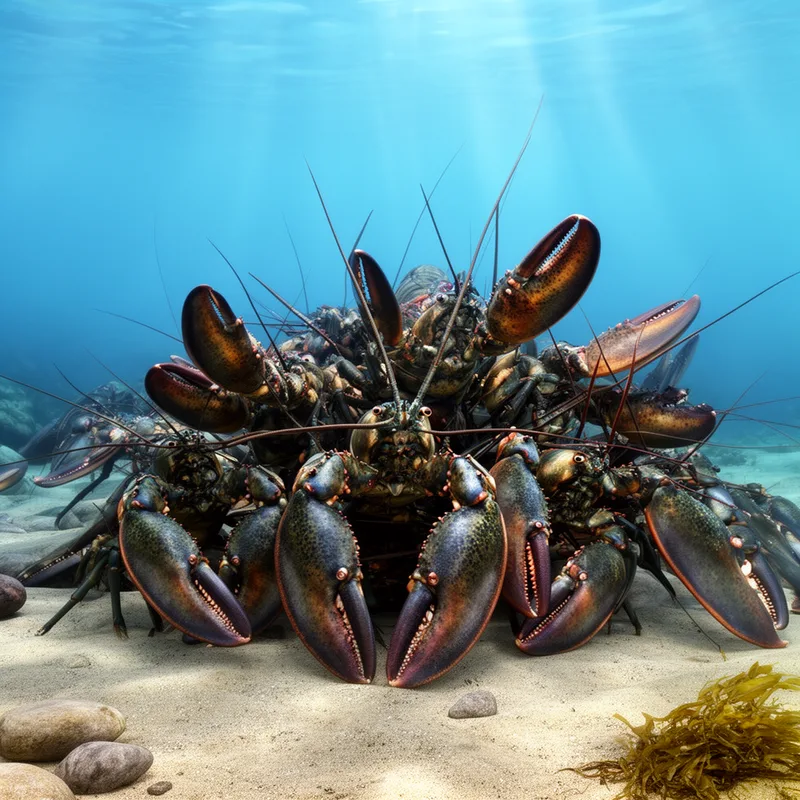
Homaridae
- noun
- /hoʊˈmɛrɪˌdeɪ/
- Specialized
- The Homaridae include the American lobster and the European lobster, both valued commercially.
Examples
-
Species within the Homaridae family are prized for their sweet, tender meat.
-
The Homaridae family includes the American lobster.
-
Marine biologists study the Homaridae to understand their evolutionary adaptations.
-
Many chefs prefer using Homaridae for their seafood dishes.
-
Marine biologists study the Homaridae to understand their evolutionary adaptations.
-
Species within the Homaridae family are prized for their sweet, tender meat.
-
The Homaridae family includes commercially important species like the American and European lobsters.
Synonyms
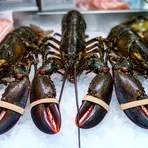
Large sea animals like lobsters with big claws that people eat
Compounds
Surface Forms
Morphology
Homaridae = Homarus (opaque) = homar + idae
Formed by attaching the specialized zoological family suffix '-idae' to the genus name 'Homarus', a scientific naming convention not transparent to an average B1 learner.
Etymology
The word Homaridae comes from the old Latin name Homarus, which means 'lobster', and the family ending -idae that means 'group'. So Homaridae simply means the group of lobsters, such as the American and European lobster, and explains why the name is used for these large-clawed lobsters people eat.

