
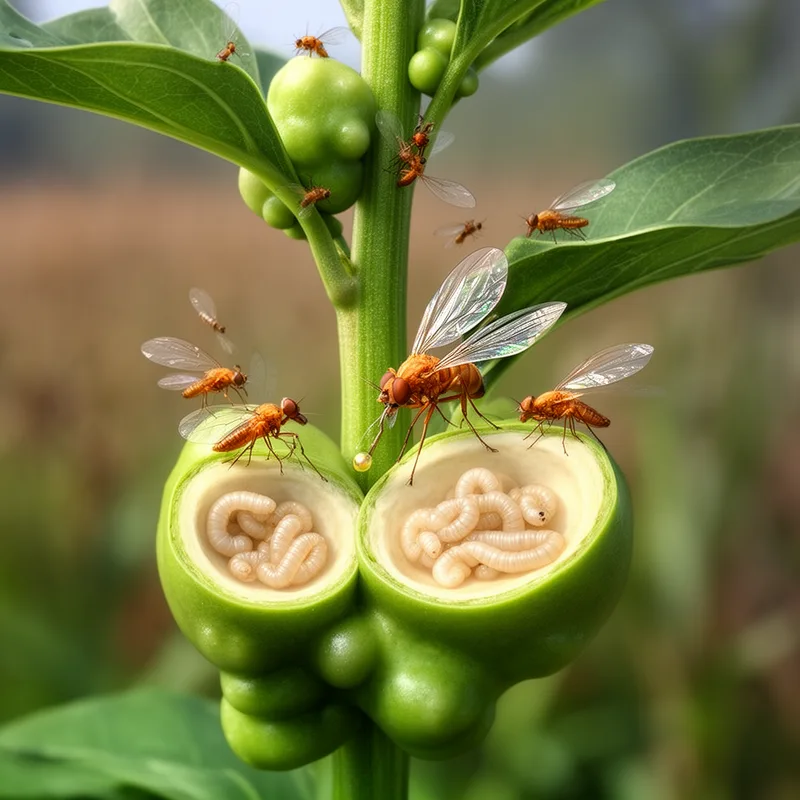
family Cecidomyidae
- noun
- /ˈfæmɪli sɪˌsɪdəˈmɪdiˌeɪ/
- Specialized
- Several species in the family Cecidomyidae are known for causing plant galls in agricultural crops.
Examples
-
The family Cecidomyidae includes many pests that affect ornamental plants and trees.
-
Researchers focus on the family Cecidomyidae to explore how their larvae create galls on host plants.
-
Entomologists are studying the family Cecidomyidae to understand their role in ecosystem dynamics.
-
The family Cecidomyidae includes many species that affect crops.
-
Many plants suffer from the family Cecidomyidae infestations.
-
Many members of the family Cecidomyidae can be found damaging various crops and ornamental gardens.
-
The family Cecidomyidae plays a crucial role in agriculture as their larvae can lead to significant plant galls.
Synonyms
Small flies that make round growths called galls on plants and sometimes damage crops
Surface Forms
Morphology
The phrase is fully compositional: 'family' denotes a taxonomic grouping and 'Cecidomyidae' is the name of a group of tiny flies, so together they simply mean the taxonomic family containing those flies. This naming pattern (family + taxon name) is standard in scientific language and cross-linguistically common, so a B1 learner who knows both constituents will understand the meaning.
Etymology
Family Cecidomyidae comes from Greek parts, with cecid meaning 'gall' and myia meaning 'fly'. That's why the name fits: these are small flies whose larvae make galls on plants.

