
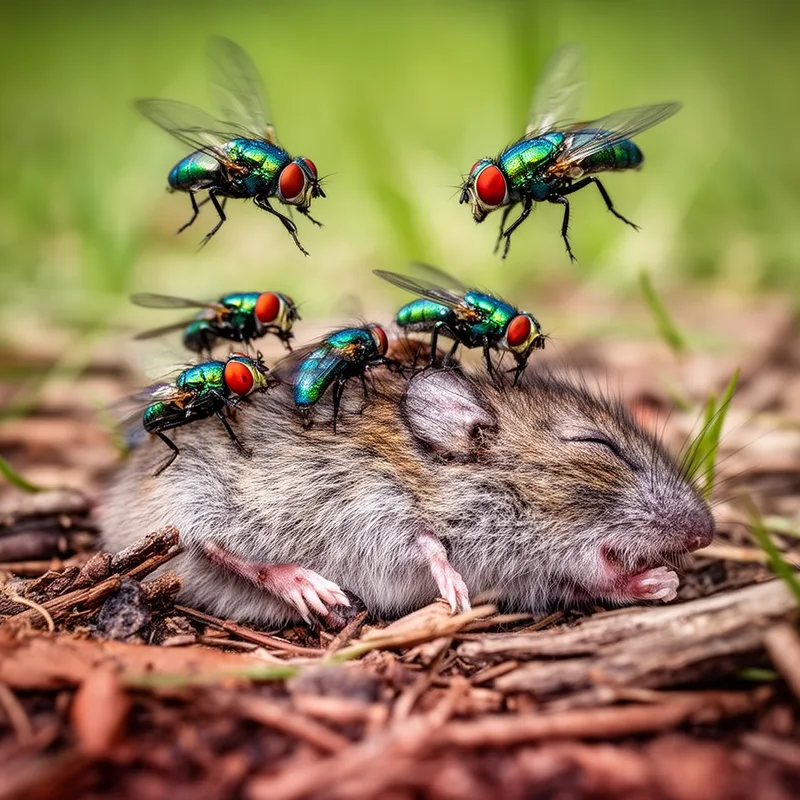
family Calliphoridae
- noun
- /ˈfæmɪli ˌkælɪˈfɔːrɪdi/
- Specialized
- Members of the family Calliphoridae are attracted to decaying animal matter.
Examples
-
The larvae of the family Calliphoridae are often used in forensic investigations to estimate time of death.
-
Researchers studied the life cycle of several species within the family Calliphoridae.
-
The family Calliphoridae includes many species of blowflies.
-
Have you ever studied the family Calliphoridae?
-
Members of the family Calliphoridae are often seen near rotting food and other organic matter.
-
The family Calliphoridae is important for decomposing organic material and recycling nutrients.
-
Entomologists classify blowflies under the family Calliphoridae due to their metallic coloration.
Synonyms

 3
7.8

A large shiny fly that lays eggs in dead animals, dung, or wounds
 1
7.2
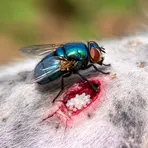
A large fly with a shiny blue-green body that lays eggs on dead animals and in wounds

 1
9.9
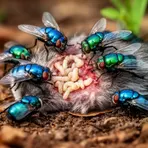
A family of flies with shiny blue or green bodies whose larvae eat dead animals
Surface Forms
Morphology
The meaning is directly compositional: 'family' (a taxonomic grouping) combined with 'Calliphoridae' (the blowfly taxon) yields 'the taxonomic family comprising Calliphoridae species.' This 'family + taxon name' pattern is standard in scientific nomenclature and cross-linguistically common, so a B1 learner who knows both constituents can infer the meaning.
Etymology
The name family Calliphoridae comes from Greek words meaning 'beautiful' and 'to carry', because many of the flies in this family have bright, shiny, almost metallic bodies. So family Calliphoridae simply means the group of these shiny flies often found near dead animals.