
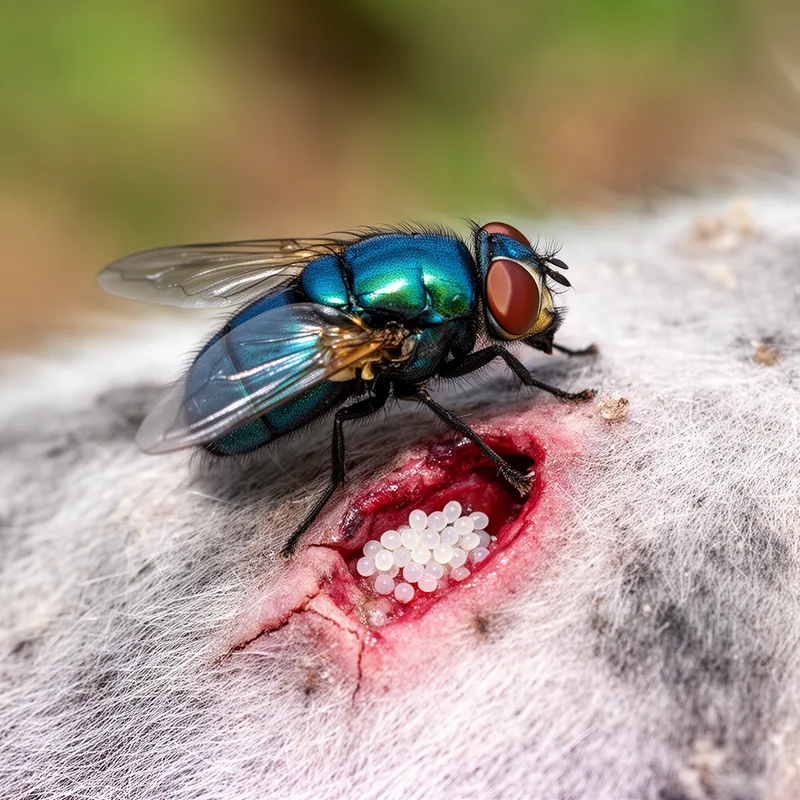
blow fly
 1
7.2
1
7.2

- noun
- /bloʊ flaɪ/
- Blow fly larvae are often used in forensic investigations to estimate the time of death.
- blow fly eggs
Examples
-
In forensic science, entomologists analyze blow flies to estimate the time of death in investigations.
-
A blow fly landed on the meat left on the picnic table.
-
The presence of blow flies indicated that decomposition had already started.
-
I saw a blow fly buzzing around the garbage.
-
Many blow flies are attracted to decaying meat.
-
Adult blow flies lay their eggs in decaying flesh, helping to accelerate the decomposition process.
-
The presence of blow flies is often an indicator that an animal has died nearby.
Synonyms
 4
7.8
4
7.8
A large shiny fly that lays eggs in dead animals, dung, or wounds
 1
6.8
1
6.8
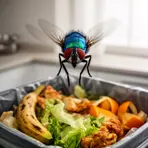
A large metallic blue fly that buzzes loudly near garbage or rotten food


 1
9.9
1
9.9
A large noisy fly that often lands on food in warm weather

A common fly with a shiny green body often found near rubbish
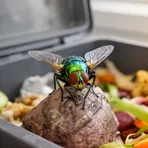
A small shiny green fly often found near garbage or dead meat
Surface Forms
Morphology
The compound is partially compositional: with the specialized sense of 'blow' meaning 'to lay/deposit eggs,' 'blow fly' can be parsed as a 'fly that deposits eggs.' However, that verb sense is rare/obscure for B1 learners and the precise species-specific details (metallic color, laying in decaying flesh) are not predictable from the parts, so full understanding is unlikely without prior exposure.
Etymology
Blow fly may come from an old use of blow for meat left to rot, because these large, shiny flies were often the first to land on dead flesh and lay eggs. That's why the name links the insect to 'decay' and helps explain why we find them on dead bodies.