
family Avicenniaceae
- noun
- /ˈfæmɪli ˌævɪˈsɛnɪˌeɪsi/
- Specialized
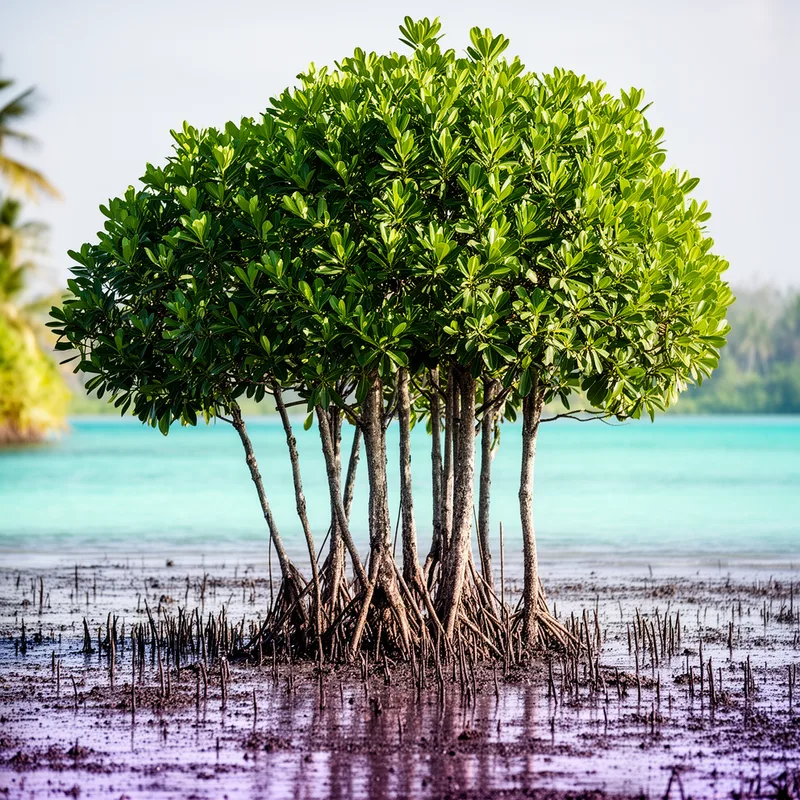
- The mangroves of the family Avicenniaceae are found in coastal regions of tropical and subtropical areas.
Examples
-
Some taxonomists recognize the family Avicenniaceae separately from Verbenaceae and Acanthaceae.
-
The family Avicenniaceae is sometimes considered synonymous with the genus Avicennia in botanical classifications.
-
The family Avicenniaceae includes several species of mangroves.
-
Many researchers study the family Avicenniaceae for its ecological importance.
-
The family Avicenniaceae includes several species that thrive in tropical coastal ecosystems.
-
Researchers have documented the diverse characteristics of the family Avicenniaceae in their studies.
-
The family Avicenniaceae plays a crucial role in the health of mangrove habitats around the world.
Synonyms

A group of mangrove trees once treated as their own plant family
Surface Forms
Morphology
family + Avicenniaceae
The phrase is fully compositional: 'family' is a taxonomic term meaning a scientific grouping and combined with the taxon name 'Avicenniaceae' yields 'the family named Avicenniaceae (a group of related plants)'. This family+name construction is standard in scientific naming and is cross-linguistically common, so a B1 learner who knows both constituents can infer it denotes a plant family even if they lack specific botanical knowledge.
Etymology
Family Avicenniaceae may come from the plant name Avicennia, which was itself named for the famous Persian doctor Avicenna. The word 'family' means a group of related plants, so Avicenniaceae simply means the plant group named after Avicennia, and that's why the name refers to those coastal mangrove plants.

