

family Actinomycetaceae
- noun
- /ˈfæmɪli ˌæktɪnəˈmaɪsɪˌteɪʃi/
- Specialized
- Some pathogens in the family Actinomycetaceae can cause actinomycosis in both humans and animals.
Examples
-
The family Actinomycetaceae includes bacteria known for forming branching filaments resembling fungal hyphae.
-
Researchers are studying the family Actinomycetaceae for its role in breaking down organic material in soil.
-
The family Actinomycetaceae includes several pathogenic species.
-
Many researchers study the family Actinomycetaceae for its medical significance.
-
Some pathogens in the family Actinomycetaceae can cause actinomycosis in both humans and animals.
-
The family Actinomycetaceae includes bacteria known for forming branching filaments resembling fungal hyphae.
-
Many researchers study the family Actinomycetaceae for its medical significance.
Synonyms
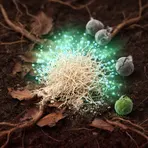
A family of thread-like soil bacteria that help break down dead plants and make antibiotics
Surface Forms
Morphology
family + Actinomycetaceae
This phrase follows the transparent scientific noun phrase pattern 'family + taxon name' where 'family' signals a taxonomic grouping and 'Actinomycetaceae' is the name of that group. A B1 learner who knows 'family' and recognizes the capitalized Latin as a scientific name can infer it refers to a biological family, even if they do not know the detailed properties of Actinomycetaceae.
Etymology
Family Actinomycetaceae comes from old parts Actino- meaning 'ray' and -mycet- meaning 'fungus' because these bacteria form branching, fungus-like threads. So the name tells us this is a 'family' of bacteria with that thread-like shape, some of which can cause disease.

