

fall equinox
- noun
- /fɔl ˈiːkwɪnɒks/
- US
- But because of the Earth's elliptical orbit, the solar year cannot be divided by the equinoxes: there are more days between the spring equinox and the fall equinox than there are if one measures between the fall equinox to the spring equinox.
Examples
-
PHOTO (COLOR): Tourists throng Tiwanaku for the summer solstice to see the sun rise through an ancient gateway, which doesn't actually happen until the fall equinox, after the tourist season.
Academic text (2003) -
We're in the fall equinox.
-
Instead, it does so during the fall equinox on September 22, several weeks after the end of the summer tourist season.
Academic text (2003) -
But because of the Earth's elliptical orbit, the solar year cannot be divided by the equinoxes: there are more days between the spring equinox and the fall equinox than there are if one measures between the fall equinox to the spring equinox.
Academic text (1990) -
Echoing Farrer’s quip, this is Miochin’s explanation behind the mystery in her "party game" as to why there are "more days between the spring equinox and the fall equinox" than in the reserve situation.
Academic text (1990) -
The fall equinox occurs on September 22, marking the start of autumn in the Northern Hemisphere.
-
On the fall equinox, day and night are almost equal in length, celebrating the change of seasons.
-
Many cultures celebrate harvest festivals during the fall equinox, recognizing its significance in the agricultural calendar.
Synonyms

 1
7.4
1
7.4

The time in autumn when day and night are about equal
 1
6.1
1
6.1
A time when day and night are about the same length that marks the start of autumn
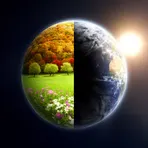
A time in late September when day and night are about equal, marking autumn north and spring south

The time when autumn begins
Surface Forms
Morphology
This is a straightforward noun + noun composition: 'equinox' names the event of equal day and night and 'fall' simply specifies which equinox, so the meaning ('the equinox that marks the start of autumn') is directly derivable from the constituents. The construction follows regular English modifier + head patterns and has clear parallels in many languages (e.g., Spanish 'equinoccio de otoño'), making it transparent to learners who know both words.
Etymology
Fall equinox names the day when the sun appears to cross Earth's middle line between north and south, so day and night are almost the same length. The word equinox comes from words meaning 'equal' and 'night', and that is why the day marks the start of autumn.