
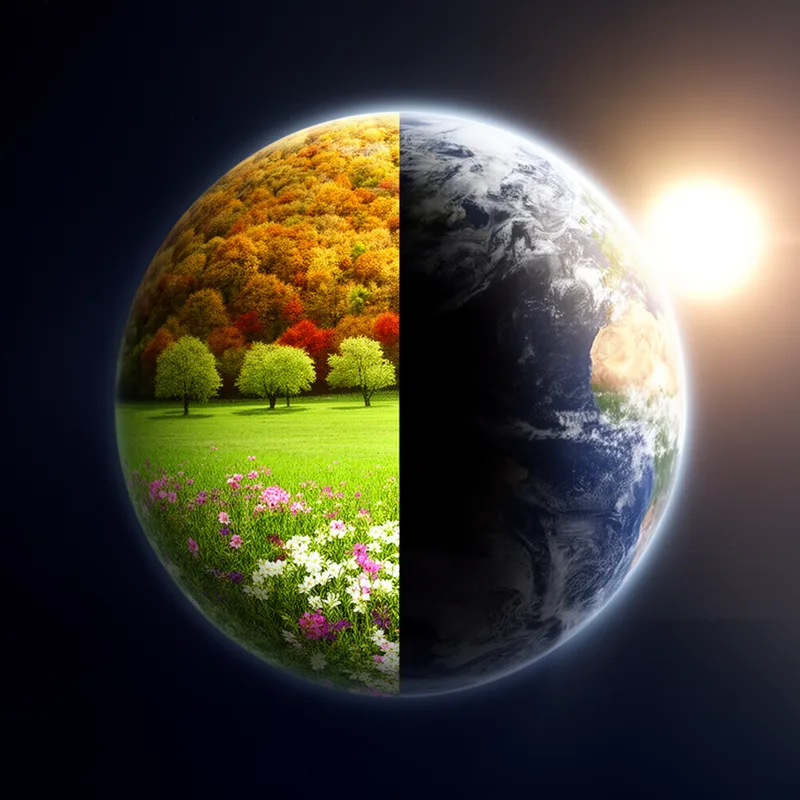
September equinox
- noun
- /sɛpˈtɛmbər ˈiːkwɪnɒks/
- Specialized
- Many cultures celebrate the September equinox as a time of harvest and renewal.
Examples
-
The presentation got even more interesting when, right in front of us, we could see how the shadow of the solar cylinder fell incredibly short because we were just days away from the September equinox.
Blog text (11) -
During the September equinox, day and night are approximately equal in length.
-
The September equinox marks the start of autumn in the Northern Hemisphere.
Synonyms

 1
7.4
1
7.4

The time in autumn when day and night are about equal
 1
6.1
1
6.1
A time when day and night are about the same length that marks the start of autumn

The time when day and night are almost the same length, marking the start of autumn in the Northern Hemisphere
Surface Forms
Morphology
The phrase combines the month name 'September' with the noun 'equinox' (equal day and night) in a straightforward noun–noun composition indicating the equinox that occurs in September. This is fully compositional and cross-linguistically transparent: a learner who knows both constituents can infer it refers to the equinox event around September, marking seasonal change.
Etymology
September equinox is the moment in September when the sun crosses the Earth's equator and day and night are about the same length. The word equinox comes from old words meaning 'equal night', and that's why the event marks the start of 'autumn' in the north and 'spring' in the south.