
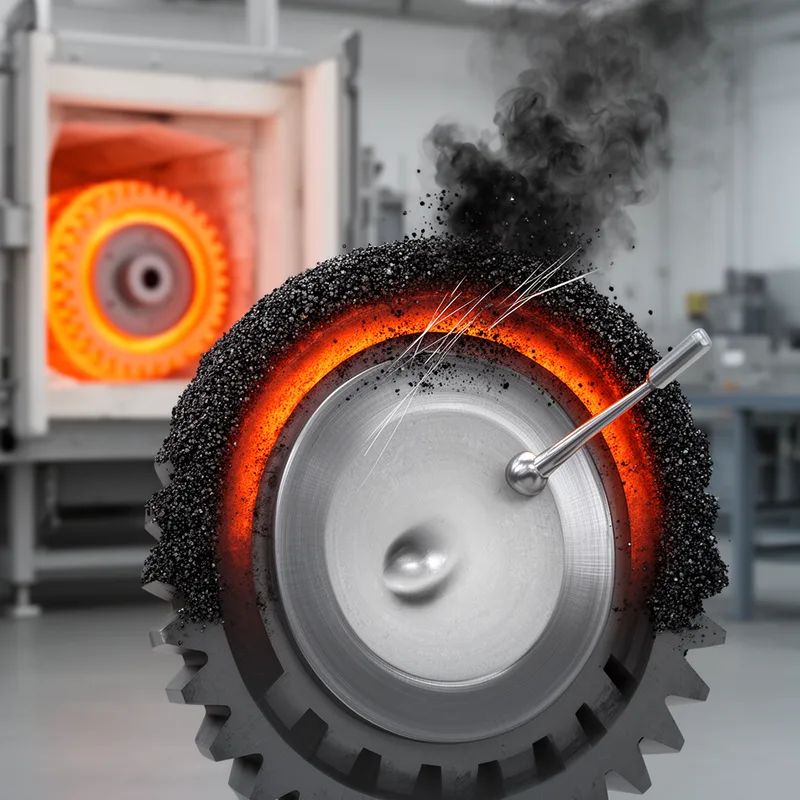
to face-harden
- verb
- /feɪsˈhɑrdən/
- Specialized
- The steel plates were face-hardened to increase their durability against heavy use.
Examples
-
They are considering face-hardening the gears to extend their operational life.
-
Engineers often face-harden metal components that are exposed to significant friction.
-
The technician will face-harden the steel rods.
-
We need to face-harden the metal to improve its durability.
-
Manufacturers usually face-harden the tools to increase their resistance to wear and tear.
-
To enhance wear resistance, the engineer decided to face-harden the surface of the steel shaft.
-
After face-hardening the metal, it became more suitable for high-friction applications.
Synonyms

 27
2.6
27
2.6

Make something hard or solid
Antonyms

How Hard
- Specialized

- Specialized
- Specialized
27
2.6
Surface Forms
Morphology
Etymology
Face-harden comes from the simple words face and harden, where face means 'surface' and harden means 'to make hard'. So, to face-harden metal is to make its outer face hard, for example by adding carbon to steel, while the inside stays softer.