
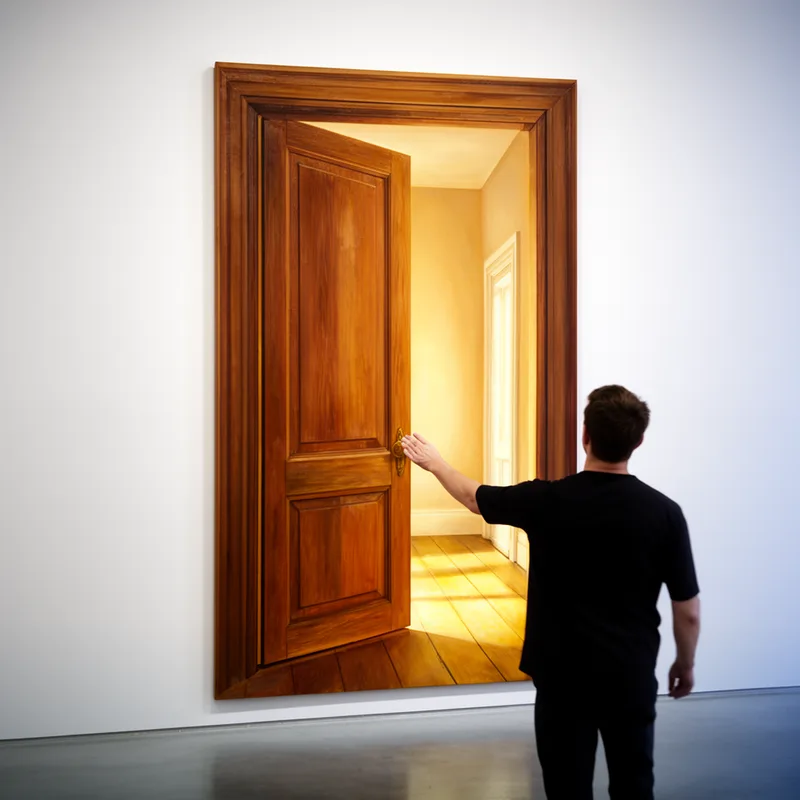
eye-deceiving
- adjective
- /ˈaɪ dɪˈsivɪŋ/
- His eye-deceiving designs use perspective to make flat surfaces look three-dimensional.
Examples
-
The eye-deceiving mural on the ceiling made the room appear much taller.
-
She specializes in eye-deceiving paintings that trick the viewer at first glance.
-
Trompe-l'oeil is an eye-deceiving style that has captivated artists for centuries.
-
What an eye-deceiving illusion that is!
-
The painting was incredibly eye-deceiving.
-
The eye-deceiving artwork created a stunning illusion that amazed everyone at the gallery.
-
Visitors were often puzzled by the eye-deceiving scenes that blurred the line between reality and illusion.
Synonyms

 148
4.4
148
4.4

Giving a wrong idea that makes people believe false things
 62
5.3
62
5.3
Appearing true but making someone believe something that is not true
 2
7.7
2
7.7
Appearing real but trying to trick your mind


 1
8.4
1
8.4
That makes something look real or three-dimensional when it is not
 1
8.2
1
8.2
Appearing real but not actually true
 1
9.1
1
9.1
Giving a false idea that makes people believe something untrue
How Realistic

Surface Forms
Morphology
Etymology
Eye-deceiving comes from joining eye ('sight') and deceive ('to trick'), so it means 'tricking the sight'. That's why we use it for art or images that look real but are actually illusions.