
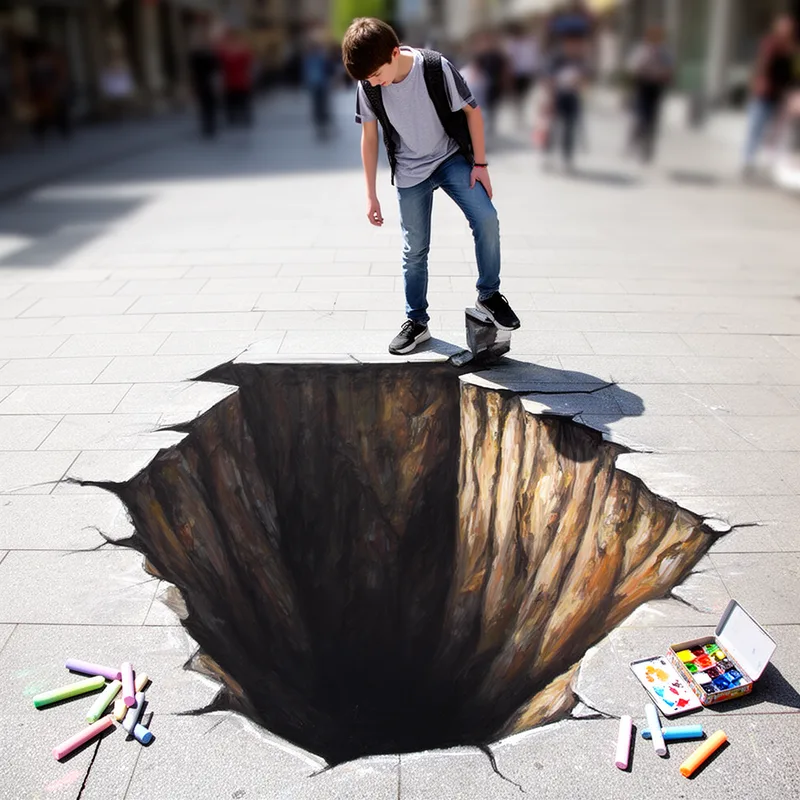
illusionistic


 1
8.4
1
8.4
- adjective
- /ɪˌluːʒəˈnɪstɪk/
- His sculptures feature illusionistic details that make them appear almost lifelike from certain angles.
- illusionistic painting
- illusionistic effects
- illusionistic space
Examples
-
Illusionistic expression thus emerges in world history as a counterweight to naturalistic mimesis.
Academic text (1992) -
The artist skillfully used illusionistic techniques to give the painting a three-dimensional effect.
-
My work is not illusionistic in the normal sense of the word.
Academic text (2012) -
The paintings help to bring it all together into a linear image but not an illusionistic whole.
Academic text (2013) -
The illusionistic strategies that the group consistently employed threatened the viewer's experience of presence.
Academic text (2014) -
One of the remarkable aspects of Kris and Kurz's book was the attempt to consider illusionistic painting as much in relation to its maker as to its subject.
Academic text (2002) -
In addition, the paintings and prints with the illusionistic effects produced by European perspective and chiaroscuro opened up fresh ground for visual curiosities, wonders, and experiments.
Academic text (2014) -
All of the paintings from Giovio's collection contain text identifying the sitter on the canvas, with no illusionistic attempts to include architecture or furniture on which the text would be inscribed.
Academic text (2013) -
The Ottoman artists and their patrons, then, appreciated and chose to use but not replicate the illusionistic works in this official context, for they were interested in creating works that were at the opposite end of the spectrum from resemblance.
Academic text (2013) -
In her latest work, the illusionistic elements create a captivating depth that draws the viewer in.
Synonyms
 12
7.0
12
7.0
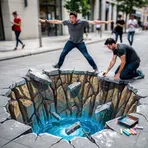
Seeming to be real but not really there
 2
7.7
2
7.7
Appearing real but trying to trick your mind
 1
7.0
1
7.0
An image that looks almost exactly like a real photograph
 1
9.4
1
9.4
Appearing real when it is not
 1
8.2
1
8.2
Appearing real but not actually true
 1
9.9
1
9.9
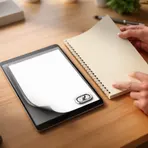
A design that makes an object on a screen look like a real item, like paper or a button
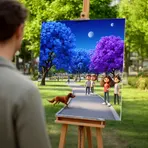
A picture or video that looks like life but shows simple, changed details
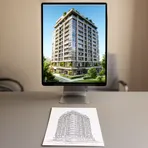
Having height, width, and depth so things look real
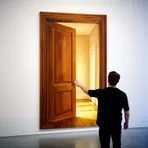
A visual effect that makes a picture or object look real when it is not

Seeming sincere but actually shallow
How Realistic

Surface Forms
Morphology
Etymology
Illusionistic comes from illusion, which comes from an old Latin word meaning 'to trick' or 'to play', and the ending -istic means 'relating to'. So illusionistic describes something made to look real even though it is a trick, like a painting that seems three-dimensional.