
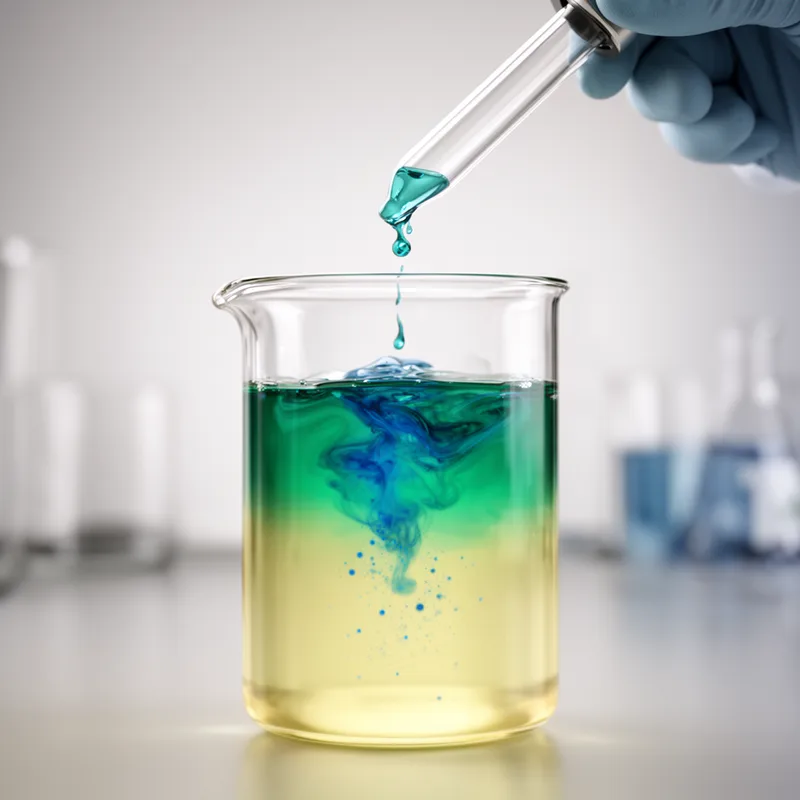
extractant
- noun
- /ɪkˈstræktənt/
- Specialized
- The laboratory used a special extractant to separate the desired chemical from the mixture.
- extractant solution
Examples
-
"The extractant solution was pumped to ion exchange and zeolite columns, where the solubilized contaminants were removed and clean extractant solution was recycled into the process," said Dale Keairns, a chemical engineer and manager of environmental technologies at the Westinghouse Science and Technology Center.
Academic text (1995) -
After an initial 15-minute rinse by flowing tap water, each valve was tested in triplicate, rinsed three times with deionized water, then rinsed with three volumes of extractant water.
Academic text (2002) -
Thus, only part of the internal surface was left exposed to the extractant water.
Academic text (2002) -
Valves were left full of extractant water over the weekend.
Academic text (2002) -
Each valve was filled with extractant water that was changed at two-hour intervals, five times throughout a 9 a.m. to 5 p.m. workday.
Academic text (2002) -
A flocculating agent was added to coagulate the fine suspended soil material in the liquid caustic extractant.
Academic text (1995) -
A control vial of extractant water was mounted along with the experimental valves to document the absence of atmospheric lead inputs to the extraction waters.
Academic text (2002) -
Abraded soil was sent to a mineral jig operating in a countercurrent rinse mode to remove contaminated extractant from the soil.
Academic text (1995) -
This created rapid, intimate contact between the soil and the caustic extractant solution to enhance contaminant removal, said David Grant, a chemical engineer and principal at the Westinghouse Science and Technology Center.
Academic text (1995) -
"The extractant solution was pumped to ion exchange and zeolite columns, where the solubilized contaminants were removed and clean extractant solution was recycled into the process," said Dale Keairns, a chemical engineer and manager of environmental technologies at the Westinghouse Science and Technology Center.
Academic text (1995)
Synonyms

 19
3.0
19
3.0

A product that takes stains, makeup, or old paint off surfaces
A liquid that carries and helps separate chemicals in lab tests
Surface Forms
Morphology
extractant = extract (semi-transparent) = ex + tract + ant
The relation to 'extract' is clear, but the technical substance sense of '-ant' is specialized and not fully predictable for many learners.
Etymology
The word extractant comes from the parts ex- meaning 'out' and tract meaning 'pull', the same root you see in tractor and in the verb extract. So an extractant is a substance often used as a liquid to 'pull out' a specific part from a mixture.