
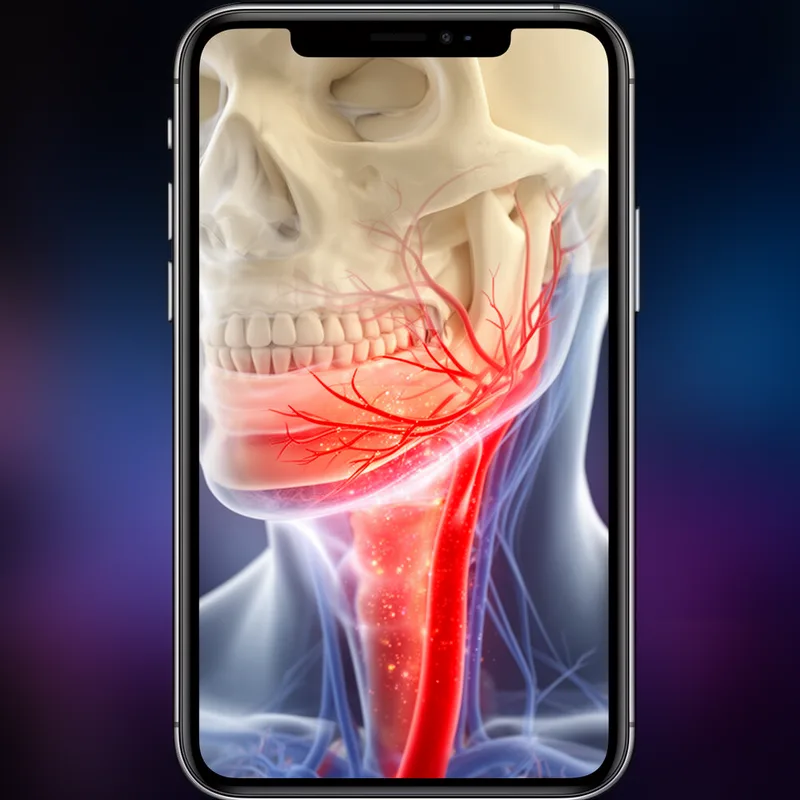
external maxillary artery
- noun
- /ɪkˈstɜrnəl ˈmæksɪˌlɛri ˈɑrteri/
- Archaic
- The external maxillary artery plays a crucial role in supplying blood to the face and neck.
Examples
-
Swelling in the region may compress the external maxillary artery, reducing blood flow to facial tissues.
-
During surgery, care must be taken not to damage the external maxillary artery.
-
The external maxillary artery supplies blood to the jaw.
-
Surgeons often examine the external maxillary artery during procedures.
-
The external maxillary artery supplies essential blood flow to the muscles of the face.
-
Injuries to the face may lead to damage of the external maxillary artery and affect blood circulation.
-
Surgeons monitor the external maxillary artery closely to prevent complications during facial surgeries.
Synonyms



 1
5.1
1
5.1
A blood vessel that carries blood to the face and neck

A blood vessel that carries blood to the lower face and neck
Surface Forms
Morphology
The term is compositionally built from 'external' (outer), 'maxillary' (relating to the upper jaw), and 'artery' (a blood vessel), so a learner who knows the constituents can infer it refers to a blood vessel associated with the outer/maxillary region (supplying jaw/face). Detailed anatomical origin/supply is specialist knowledge, but the basic referent is predictably derived from the parts and follows common cross-linguistic medical naming patterns.
Etymology
External maxillary artery is a name that gives a simple picture: external means 'outside' and maxillary refers to the 'upper jaw' and 'face', so this artery runs toward and brings blood to the neck and face.