
extensor
 3
7.2
3
7.2

- noun
- /ɪkˈstɛnsər/
- Specialized
- Similar sex differences in endurance of the back extensors have been reported before (2, 11, 22).
- extensor muscle
- hip extensor
- knee extensor
Loading YouTube…
Watch on YouTubeSo that's that's challenging my balance, the whole extensor chain strength, etcetera.
- So that's that's challenging my balance, the whole extensor chain strength, etcetera.
Examples
-
Our study emphasizes the role of the extensor mechanism and does not look at the effect of the flexor mechanism.
Academic text (2001) -
Movement of the extensor tendon causes the hand to open a distance proportional to the shortening of that muscle.
Academic text (2001) -
The three basic approaches to measuring trunk extensor strength are:
Academic text (1997) -
Future studies should investigate methods to improve the recruitment properties of the hip extensor muscles through innovative designs.
Academic text (2001) -
Any of the aforementioned mechanisms could have led to the underestimation of the maximum extensor strength.
Academic text (1997) -
Therefore, it probably functioned as a stabilizer for the lateral rotation and as an arm extensor.
Academic text (1992) -
Although trunk flexor and extensor muscles are physiologically postural muscles, they are active throughout most activities, including quiet standing.
Academic text (1997) -
Persons with CLBP demonstrate reduced endurance of trunk flexor and extensor muscles.
Academic text (1997) -
Endurance testing of trunk muscles examines the localized capability of the flexor and extensor muscles of the trunk to sustain activity.
Academic text (1997) -
The extensor muscles in your legs help you stand up straight when you walk.
Synonyms


 1
5.2
1
5.2
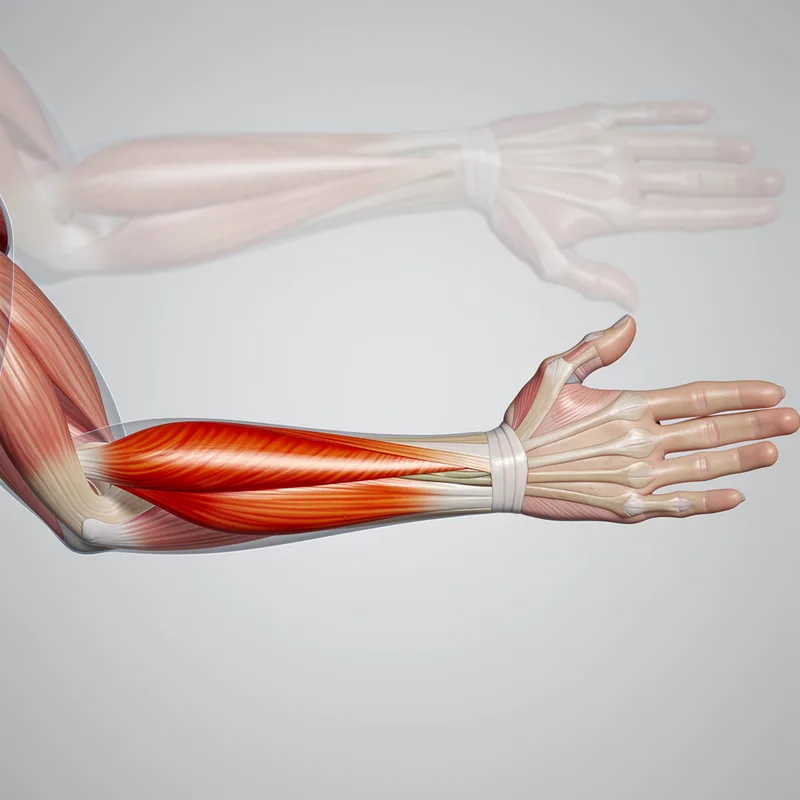
A muscle that straightens a part of the body when it pulls

A muscle that straightens the spine and helps keep the back upright
Antonyms

Compounds

- Specialized
An exercise done on a machine that makes the front thigh muscles stronger by straightening the knee
Surface Forms
Morphology
Etymology
The word extensor comes from the root extend, as in extension, from Latin extendere which means 'to stretch out', and the ending -or meaning 'one who does'. So an extensor is literally 'one that stretches', which is why it is the muscle that straightens a limb.