

expedition
 358
4.1
358
4.1

- noun
- /ˌɛkspəˈdɪʃən/
- Dr. Clarke wants to mount an expedition to find the Lost City of Sun Wu-Kung.
- lead an expedition
- sponsor an expedition
- a military expedition
Loading YouTube…
Watch on YouTubeAnd Conrad's going to lead this expedition and we're going to do Gannett.
- And Conrad's going to lead this expedition and we're going to do Gannett.
- So let's go on a little archaeological expedition and see what we find.
- Rockefeller was part was a big patron of Byrd's expeditions to the North Pole and the South Pole.
- He says if I propose to you to join my North Pole expedition, your option is momentous.
- The KMTCCP split came at a difficult time for the Northern Expedition.
- And so Eddington set out this expedition.
- And he was the only journalist on the first successful Everest expedition.
- Stein also removed objects from the site, as did other foreign expeditions.
- And they had the expedition trauma kits from focus research group.
- We are not going to link with this expedition whatsoever.
- So we are wearing Shackleton expedition grade parkas I guess.
Examples
-
May I be placed in charge of the expedition to make contact with the Builders?
Fiction book (1991) -
We set out on an expedition to explore the remote jungle and document new wildlife.
-
But today we we got to tell you about our expedition with our boys.
-
Three of us will go on an expedition to find out.
-
The next day, the first Roman expedition to the island of Britain was officially over.
-
Both are ready to leave on a long expedition.
-
So let's go on a little archaeological expedition and see what we find.
-
I was on an oceanographic expedition up north of Svalbard.
-
It took three expeditions and five years to find that one!
-
Isaiah's father was on an expedition for Greenland Mining when he died.
Synonyms
 ∞
1.0
∞
1.0
A journey to a place and back for work or fun
 ∞
1.1
∞
1.1
A long trip from one place to another or a change in someone's life
 819
1.0
819
1.0
A trip visiting several places and returning to the start, usually for work or pleasure
 683
1.4
683
1.4
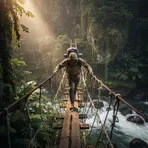
An unusual, exciting experience that can be dangerous
 328
4.7
328
4.7
A long, determined search for something important, often with adventure
 156
2.8
156
2.8
To travel through a place to find new things, like a jungle or ocean
 154
3.1
154
3.1
A long journey by ship or boat to distant places
 95
1.0
95
1.0
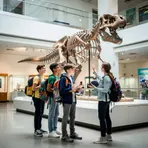
An organized visit by students to learn outside the classroom
 83
1.1
83
1.1
A short trip with other people for pleasure
 43
3.6
43
3.6
A short trip for pleasure, often with a group
 37
3.1
37
3.1
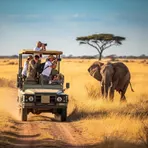
A trip to see or hunt wild animals, usually in Africa
 15
4.8
15
4.8
A short trip for fun
 11
9.1
11
9.1
A trip paid for by someone else, often taken for pleasure and seen as unnecessary
 4
4.8
4
4.8
A long exciting trip with adventure and many challenges
 1
3.0
1
3.0
A journey taken to enjoy yourself rather than for work
 1
3.4
1
3.4
A short trip to find out about an area


 1
6.3
1
6.3
A journey to Antarctica to explore and study its land and animals
 1
3.0
1
3.0
A journey on a boat for fun and exploring new places
 1
1.4
1
1.4
A journey across the ocean by ship or boat

A planned journey to explore unknown places and make maps
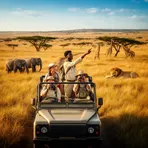
A trip to see wild animals in their natural home

A journey that includes exciting activities and some risk
Compounds

- Informal
9
6.5
An investigation done to find damaging information with little or no evidence

 1
6.3
1
6.3
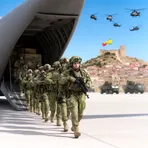
A trip by soldiers to fight and take control of a place in another country

A 1804–1806 journey in which Lewis and Clark explore the American northwest and reach the Pacific

- Specialized
A military force that goes into another country to attack and take control
How Difficult

Surface Forms
Morphology
expedition = expedite (opaque) = exped + ion
Although 'expedition' is historically formed from the same Latin root as 'expedite' plus the noun-forming suffix '-ion', the modern sense 'an organized journey' cannot be derived from the meaning of the English verb 'expedite' ('speed up'), so the relationship is not transparent to typical learners.
Etymology
Expedition comes from the Latin parts ex- 'out' and ped 'foot', so it originally meant 'to free the feet' and set out quickly. You can see ped in everyday words like pedal and pedestrian, and that is why an expedition today is an organized journey a group makes to go somewhere for a specific purpose.