

geographic expedition
- noun
- /ˌdʒiəˈɡræfɪk ˌɛkspəˈdɪʃən/
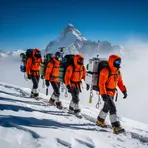
- During the geographic expedition, scientists collected samples of soil and water from remote locations to study environmental changes.
Examples
-
What set the Lewis and Clark Expedition apart was that it was initiated explicitly as a geographic expedition intended to survey the new territory and understand the character of the land then known as the Trans-Missouri West (Allen 1972).
Academic text (2018) -
The previous year, captains Paul Voulet and Charles Chanoine had led a force of six hundred African conscripts on what was to have been a geographic expedition.
Academic text (2002) -
The research team set out on a geographic expedition to map the uncharted islands of the Arctic region.
-
In the early 20th century, adventurers often embarked on a geographic expedition to discover new territories in Africa.
Synonyms

 ∞
1.0
∞
1.0

A journey to a place and back for work or fun
 358
4.1
358
4.1
An organized trip by a group for a special purpose like exploring or doing research
 156
2.8
156
2.8
To travel through a place to find new things, like a jungle or ocean
 1
3.4
1
3.4
A short trip to find out about an area
How Extensive

Surface Forms
Morphology
The meaning is directly and transparently derived from combining 'geographic' (relating to the Earth or geography) with 'expedition' (an organized journey); together they denote an organized journey for geographic research or exploration. This adjective+noun composition follows standard, cross-linguistically common patterns, so a B1 learner who knows both words can readily infer the MWE's meaning.
Etymology
The noun geographic expedition comes from the image of a team going on a planned trip to see and record new places. Because geographic means 'about land' and expedition means 'a long planned journey', the phrase now means an organized journey 'to explore or map' unknown regions.