
exoskeletal
 1
7.5
1
7.5

- adjective
- /ˌɛksoʊˈskɛtəl/
- Specialized
- The exoskeletal engine concept, in which the shafts and discs are eliminated and replaced by rotating casings that support the blades in spanwise compression, enables higher thermal efficiency through higher operating temperatures.
- exoskeletal engine
Examples
-
We know these hormones are responsible for growth, bone structure, exoskeletal physiology and skin maintenance.
-
We develop everything from exoskeletal reconstruction, which makes soldiers faster and stronger, to neural prosthetics, which enhance the way they react.
-
The exoskeletal method has now almost been completely abandoned.
Academic text (2009) -
We believe they are of the same exoskeletal type, and obviously not Russian or North Korean.
-
As mentioned above, lower limb prostheses are built in two different ways: the exoskeletal method and the endoskeletal method.
Academic text (2009) -
They will always be spinning, pulsing, exoskeletal contraptions that naturally attract the eye.
Academic text (2004) -
This is the creature that comes from the hole: black and exoskeletal, man-sized and gleaming, bristling with many-jointed limbs.
Blog text (3) -
Among the novel aircraft propulsion concepts considered are adaptive propulsion system cycles, distributed mini engines, an exoskeletal engine, and pulse detonation engines.
Academic text (2001) -
Some animals, like crabs and lobsters, have exoskeletal structures that protect their bodies.
-
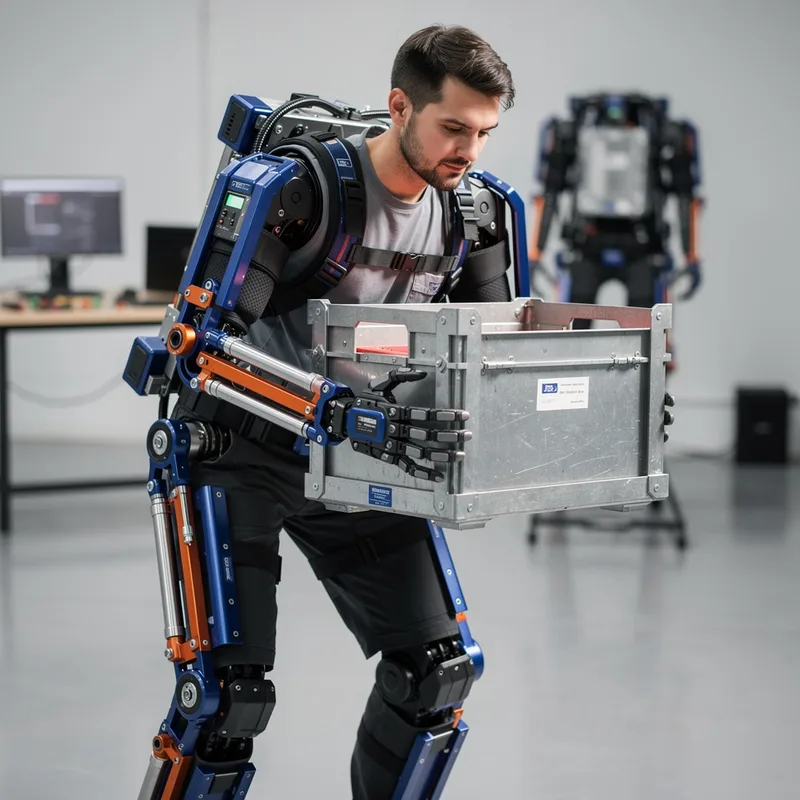
The new exoskeletal suit is designed to support disabled individuals in their daily activities.
How Shell-like

Surface Forms
Morphology
Etymology
Exoskeletal comes from exo- meaning 'outside' and skeleton meaning 'frame' or 'support'. So an exoskeletal design has its support on the outside, like a crab or insect shell, which is why we use the word for machines, suits, or buildings with an outer frame.