

crustaceous
- adjective
- /krəˈsteɪʃəs/
- Specialized
- The artist depicted the crab’s crustaceous armor in vivid detail.
Examples
-
Some soils in arid regions develop a crustaceous layer after heavy rainfall.
-
The snail’s crustaceous covering protects it from predators.
-
The crustaceous shell of the crab protects it from predators.
-
Many crustaceous species live in the ocean.
-
The ancient sea turtle's shell was crustaceous, providing it with protection from predators.
-
Some crustaceous creatures, like crabs and lobsters, can often be found scuttling along the ocean floor.
-
The orange crustaceous surface of the barnacles made the rock look weathered and unique.
Synonyms

 14
2.5
14
2.5

Having a hard, crisp outer layer like the top of bread
 1
4.2
1
4.2
Covered with a hard layer on the surface


 1
3.6
1
3.6
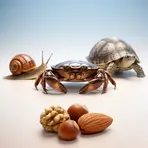
Having a hard outer covering that protects what is inside, like a crab or nut
 1
1.9
1
1.9
Having a hard outer covering like a crab or nut
 1
5.8
1
5.8
Covered with a hard layer, often of dirt, shells, or jewels

Having a hard outer layer like the top of bread or rock

Having a hard shell or outer covering like a turtle

Covered by a hard dry outer layer

Lichens with a thin crust that sticks closely to the surface they grow on
Antonyms

How Shell-like

Surface Forms
Morphology
crustaceous = crustacean (semi-transparent) = crustace + ous
The suffix '-ous' indicates possessing the qualities of 'crustacean', but the specific adjectival form 'crustaceous' is not immediately obvious to all learners.
Etymology
Crustaceous comes from the simple word crust, which means 'a hard outer layer', plus the ending -aceous, which means 'like' or 'having'. So crustaceous describes something that is 'like' a crust or has a hard outer shell.