
exoderm


 1
9.9
- noun
- /ˈɛksəˌdɜrm/
- Specialized
- Studying the exoderm is essential to understanding early stages of human development.
Examples
-
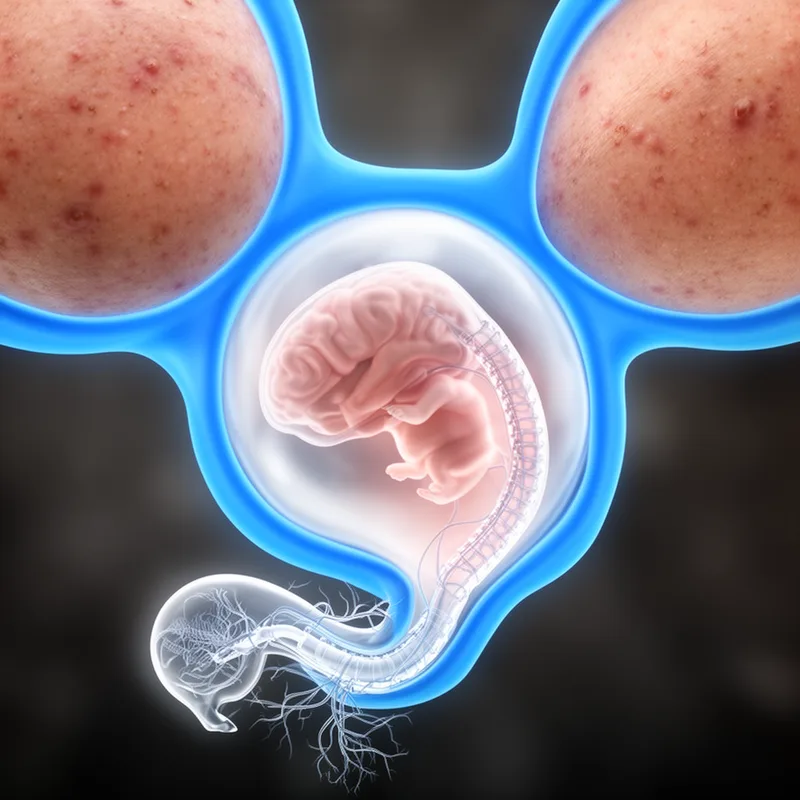
The exoderm gives rise to both the epidermis and the nervous system in vertebrate embryos.
-
The exoderm forms the outer layer of the embryo.
-
The cells of the exoderm begin to differentiate soon after fertilization.
-
The exoderm is vital for the embryo.
-
During embryonic development, the exoderm forms the outermost layer of the skin and contributes to the nervous system.
-
The exoderm is crucial as it differentiates into structures such as the epidermis and neural tissue.
-
Understanding the role of the exoderm helps explain how the skin and nerves are formed in embryos.
Synonyms
 1
9.9
The outer layer of cells in an embryo that becomes skin and the nervous system
The outer layer of cells in an early embryo that later becomes the skin and nervous system
Surface Forms
Morphology
exoderm = exo + derm
The parts exo- ('outer') + derm ('skin') compose the meaning, but both are specialized combining forms from Greek that may be unfamiliar to general learners.
Etymology
Exoderm comes from the Greek parts exo- meaning 'outside' and -derm meaning 'skin'. So the exoderm is the outer skin layer of an embryo that later becomes the skin and parts of the nervous system.