
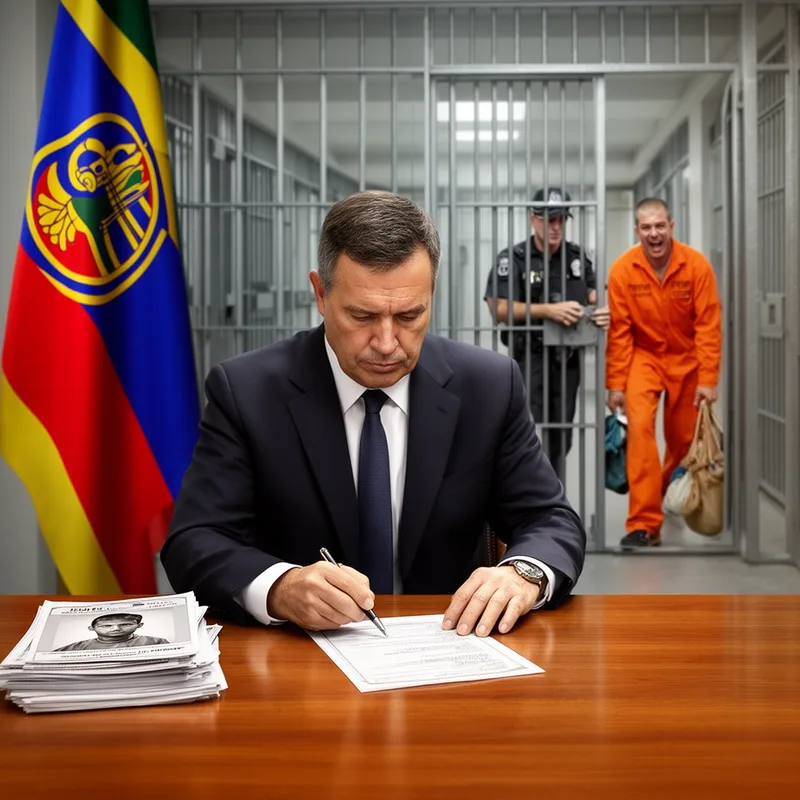
executive clemency
 1
7.9
1
7.9

- noun
- /ɪɡˈzɛkjʊtɪv ˈklɛmənsi/
- Formal
- The Governor announced that he would grant executive clemency to several prisoners next week.
Examples
-
After much consideration, the President decided to use executive clemency to reduce the sentences of non-violent offenders.
-
Rejecting Pollard's application for executive clemency, President Clinton maintained that his decision was based on the grave nature of his offense and the considerable damage that his actions caused our nation.
Academic text (1996) -
That said, aren't these obvious candidates for executive clemency?
Blog text (3) -
Moreover, 1,815 of those death row prisoners, or 39 percent, succeeded in having their death sentences lifted by various means of judicial review or executive clemency.
Academic text (1994) -
Many advocates are urging the mayor to exercise executive clemency for those serving lengthy sentences for minor crimes.
Synonyms
 252
4.2
252
4.2
An official act that forgives someone for a crime and ends their punishment
 39
8.4
39
8.4
Mercy that a person in power gives, for example a judge or governor
 5
7.7
5
7.7
To officially reduce a prisoner's punishment to a lighter sentence

An official act that forgives someone for a crime and ends their legal punishments
Surface Forms
Morphology
The phrase is directly compositional: 'clemency' means mercy or pardon and 'executive' specifies the office/person who grants it, so together they denote mercy or pardons issued by the executive branch. This noun–modifier structure is common cross‑linguistically and follows ordinary semantic composition, so a B1 learner who knows both constituents can infer the meaning.
Etymology
Executive clemency comes from the image of a leader giving mercy: executive is the person who leads the government and clemency means mercy or forgiveness. Imagine a president lifting a prisoner's chains and saying 'pardon' or 'reduce a sentence', and that is why the phrase means the leader's power to forgive or lessen a punishment.