
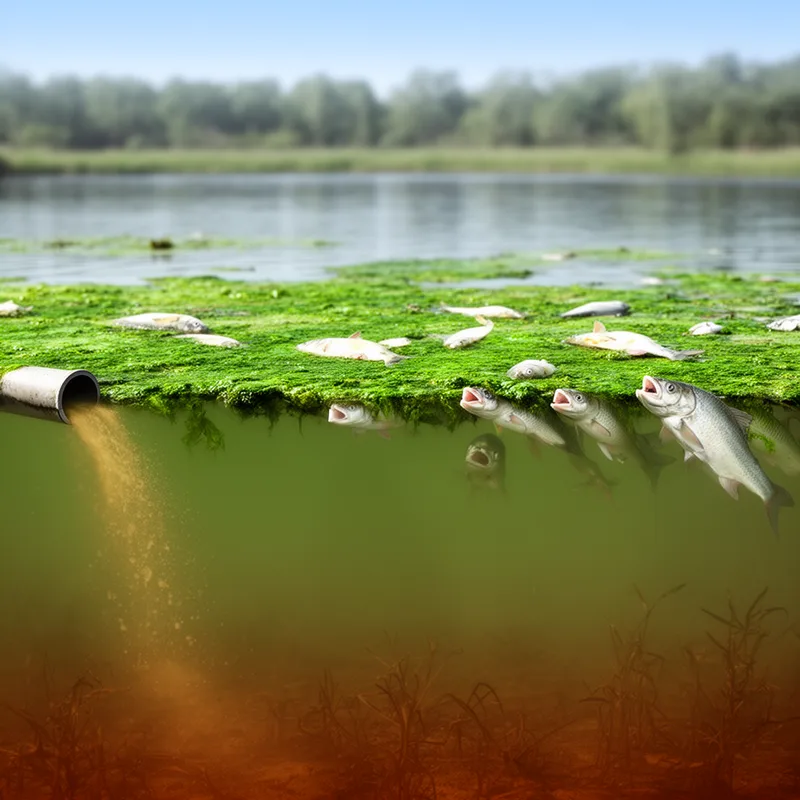
eutrophication


 1
9.9
- noun
- /juːˌtroʊfɪˈkeɪʃən/
- Specialized
- Increased P in runoff results in increased aquatic growth and premature eutrophication of lakes and streams.
- coastal eutrophication
- Eutrophication of lakes
- eutrophication of water
Examples
-
Human impacts can also trigger abrupt changes in marine ecosystems, particularly through overfishing and eutrophication.
Academic text (2005) -
As excess nutrients are rinsed away from fertilized fields, streams and lakes experience eutrophication.
Academic text (2006) -
The current crisis probably began with the eutrophication of the lake basin.
Academic text (1992) -
The first example is a historic case: determining the cause of lake eutrophication.
Academic text (2002) -
That human activity has made eutrophication a regular and widespread occurrence.
-
All countries in the Baltic region need dramatic reform in agricultural policies and practices to address eutrophication.
Academic text (2000) -
Nitrate is a prime cause of eutrophication in coastal waters such as the Chesapeake Bay.
Academic text (2008) -
The early onset of eutrophication was most likely a consequence of erosion and sewage discharge.
Academic text (2007) -
The buildup of nitrogen and phosphorus has encouraged eutrophication of reservoirs and lakes from which irrigation water is drawn.
Academic text (2000) -
Eutrophication occurs when a body of water becomes overly enriched with nutrients, leading to harmful algal blooms.
How Nutrient-rich

Surface Forms
Morphology
eutrophication = eutrophic (opaque) = eu + troph + ic + ation
The change from 'eutrophic' to 'eutrophication' is regular, but the base adjective is technical and the full meaning is not readily recoverable for an average learner.
Etymology
Eutrophication comes from Greek parts eu- meaning 'good' and troph meaning 'nourishment' or 'food', so it literally says 'well fed'. That's why eutrophication describes what happens when a lake or river gets too much 'food' (nutrients): plants and algae grow too much and then use up the oxygen, harming animal life.