
oligotrophic
- adjective
- /ˌoʊlɪˈɡoʊtrəfɪk/
- Specialized
- Adaptations to acidic, nutrient-deficient soils are required for species to grow in the highly oligotrophic heath forests, which are particularly extensive in the coastal regions of Borneo.
- oligotrophic waters
Examples
-
Primary productivity in Lake Bonney is usually below 1 ig/L·d, categorizing it as extremely oligotrophic.
Academic text (1999) -
And I would add that anomalies as high as seen are pretty unusual for the open, normally oligotrophic ocean.
Blog text (6) -
Studies have shown that in more oligotrophic marine waters, aquaculture effluents increase local biodiversity.
Academic text (2009) -
For example, artificial nutrient enrichment of a naturally oligotrophic ecosystem may increase local species diversity yet eliminate a unique community.
Academic text (1994) -
The bogs are deficient in nutrients (oligotrophic) because of the lack of mineral input, and the leaching of organic compounds causes the water to become extremely acidic (pH 4 or less).
Academic text (2011) -
Struebig ML, Galdikas BMF, Suatma. 2006. Bat diversity in oligotrophic forests of southern Borneo. Oryx 40: 447-455.
Academic text (2011) -
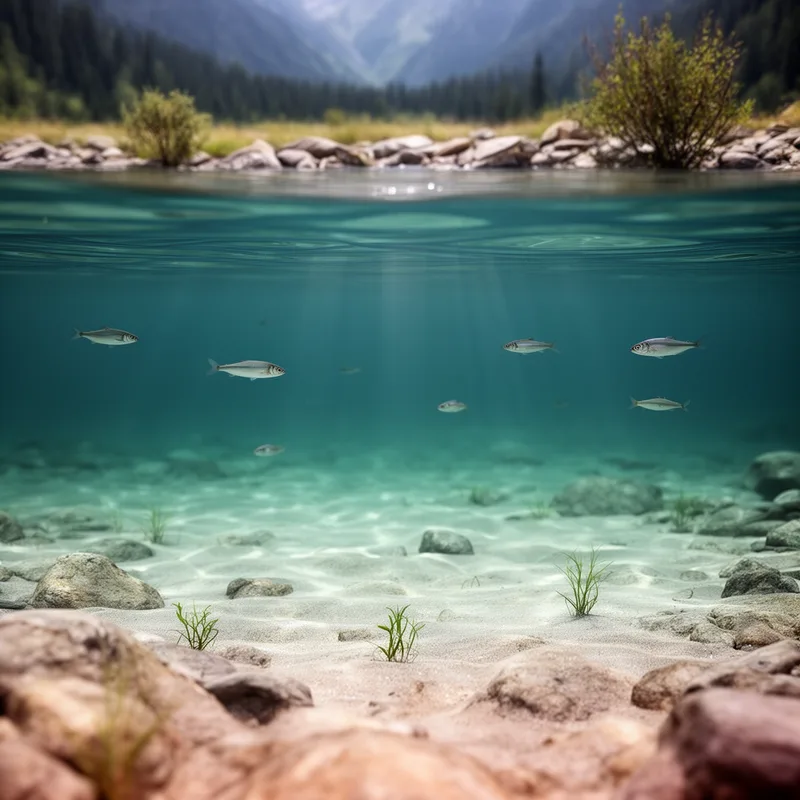
The clear waters of the oligotrophic lake are home to few fish and plants, making it a unique environment.
-
These oligotrophic forests, with their nutrient-poor soils, support specialized plant species adapted to harsh conditions.
-
Due to its oligotrophic nature, the river has a low density of aquatic life compared to more nutrient-rich ecosystems.
Antonyms

- Specialized
Full of nutrients that cause a lot of algae and low oxygen in a lake or pond
How Nutrient-Rich
- Specialized

- Specialized
Surface Forms
Morphology
oligotrophic = trophic (opaque) = oligo + troph + ic
Built from scientific combining forms ('oligo-' + 'trophic'); these are not productive or familiar to an average B1 learner, so the meaning is not reliably derivable.
Etymology
The word oligotrophic comes from Greek parts oligo- meaning 'few' and -trophic from trophē meaning 'food', the same idea behind nutrition. So an oligotrophic lake or soil has 'few nutrients' and supports very little plant or animal life.

