
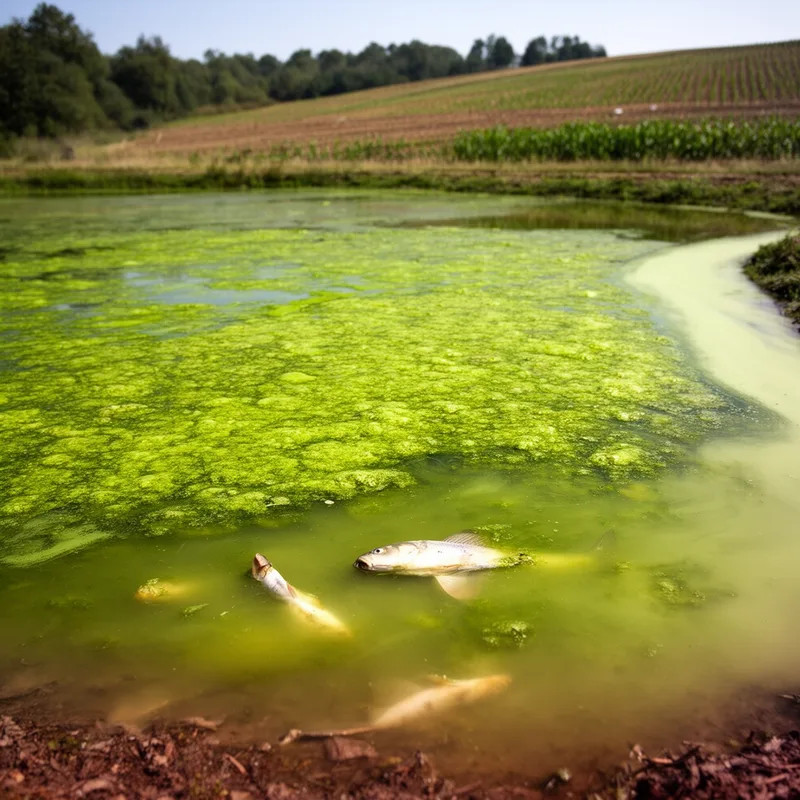
eutrophic
- adjective
- /juːˈtrɒfɪk/
- Specialized
- Elevated concentrations of nitrogen and phosphorus made the bay highly eutrophic.
- eutrophic lake
- eutrophic waters
Examples
-
The increased algal blooms and decreased oxygen supplies in eutrophic waters can have detrimental effects on fisheries and other aquatic populations.
Academic text (1994) -
For example, in a eutrophic lake sediment, microbes may break down phytoplankton and macrophytes, releasing phosphorus.
Academic text (2000) -
The high disgust-sensitivity group expressed a lower preference for water bodies with algae, eutrophic water, and weeds along the edges.
Academic text (1999) -
The regulations prescribe procedures for monitoring the nitrate concentration and eutrophic state in freshwaters, as required by the Nitrates Directive.
Academic text (2000) -
Eutrophication. Lakes and streams can become eutrophic due to excessive inputs of nutrients (nitrogen and/or phosphorus) from point or non-point sources.
Academic text (2000) -
Eutrophic water slides were characterized by the presence of algae and other debris in the water—areas that should be rich in aquatic invertebrates.
Academic text (1999) -
The researchers studied the effects of eutrophic water on local fish populations.
-
Eutrophic lakes often experience algal blooms that can significantly reduce oxygen levels.
-
Scientists warned that the eutrophic conditions of the river could harm the ecosystem.
Antonyms

How Nutrient-Rich
- Specialized

- Specialized
Surface Forms
Morphology
eutrophic = trophic (semi-transparent) = eu + troph + ic
The prefix 'eu-' means 'good' or 'well', but the specific ecological context of 'eutrophic' is specialized.
Etymology
Eutrophic comes from Greek parts eu- 'good' and troph 'food'. So a eutrophic lake is like a 'well-fed' lake full of nutrients, which makes lots of algae and plants grow and can lower the water's oxygen.

