
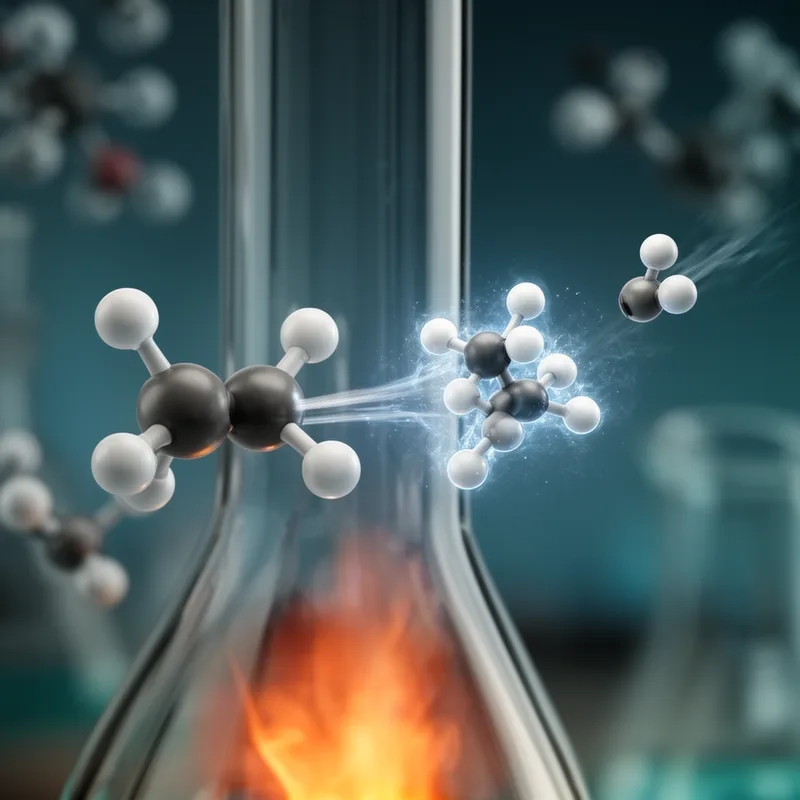
ethyl radical
- noun
- /ˈɛθəl ˈrædɪkəl/
- Specialized
- Scientists detected the presence of an ethyl radical in the reaction flask.
Examples
-
During combustion, the formation of the ethyl radical can initiate chain reactions.
-
The ethyl radical is crucial in organic chemistry.
-
The ethyl radical plays an important role in many organic reactions.
-
Can you explain what an ethyl radical is?
-
The formation of the ethyl radical is essential for the reaction to proceed in organic chemistry.
-
Researchers observed that an ethyl radical can react with pollutants to help clean the environment.
-
In the laboratory, the stability of the ethyl radical is often tested under various conditions.
Synonyms
 5
7.7
5
7.7

A group of atoms in a molecule made of two carbon atoms and five hydrogen atoms
Surface Forms
Morphology
The term is directly compositional: 'ethyl' names the C2H5 group and 'radical' denotes a reactive chemical species, so 'ethyl radical' straightforwardly means the C2H5 radical. While technical, the meaning follows regular chemical noun+noun compounding and would be predictable to a learner who already knows both constituent words.
Etymology
The chemical name ethyl radical combines the small two-carbon group ethyl with the older word radical, which meant 'root' or a part that stays together. Imagine a tiny two-carbon 'root' C2H5 that has lost a hydrogen and is very eager to join other atoms, so today ethyl radical means 'a reactive group of atoms'.