

ethanoyl group
- noun
- /ˈiːθəˌnɔɪl ɡruːp/
- Specialized
- Attaching an ethanoyl group to the molecule alters its chemical properties significantly.
Examples
-
The ethanoyl group is an important component in acetylcholine, a key neurotransmitter.
-
The presence of an ethanoyl group can be detected through specific spectroscopic techniques.
-
The ethanoyl group is crucial in many biochemical reactions.
-
An ethanoyl group can be found in acetylated compounds.
-
The ethanoyl group plays a vital role in the synthesis of various pharmaceuticals.
-
Researchers analyzed how the ethanoyl group affects the reactivity of organic compounds.
-
In biochemistry, an ethanoyl group is essential for the structure of certain enzymes.
Synonyms

 1
9.3
1
9.3

A small chemical group made from acetic acid that attaches to other molecules

A small chemical part with atoms CH3CO that attaches to other molecules
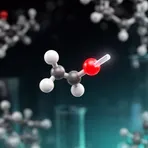
A part of a molecule used in chemistry, formed from the acid in vinegar, written CH3CO
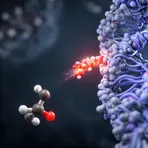
A small group of atoms from acetic acid that can attach to other molecules
Surface Forms
Morphology
ethanoyl + group
The element 'ethanoyl' is a technical chemical morpheme (ethano-/‑yl) that an average B1 learner would not be able to parse from ordinary vocabulary, while 'group' only gives a very general sense of a collection. Understanding the precise structural meaning (CH3CO– / acetyl) requires domain-specific chemistry knowledge rather than simple compositional inference, so the expression is not predictable from its parts for typical learners.
Etymology
Ethanoyl group: The name ethanoyl group comes from ethanoic acid, the main acid in vinegar often called 'acetic acid'. It is the small piece CH3CO– left when that acid loses a hydrogen and sticks to other molecules, so the name helps you remember it is the vinegar-made part that attaches to a molecule and changes how it acts.