
ethanoyl chloride
- noun
- /ˈiːθəˌnɔɪl ˈklɔɪrd/
- Specialized
- In the laboratory, ethanoyl chloride is used to introduce acyl groups into organic molecules.
Examples
-
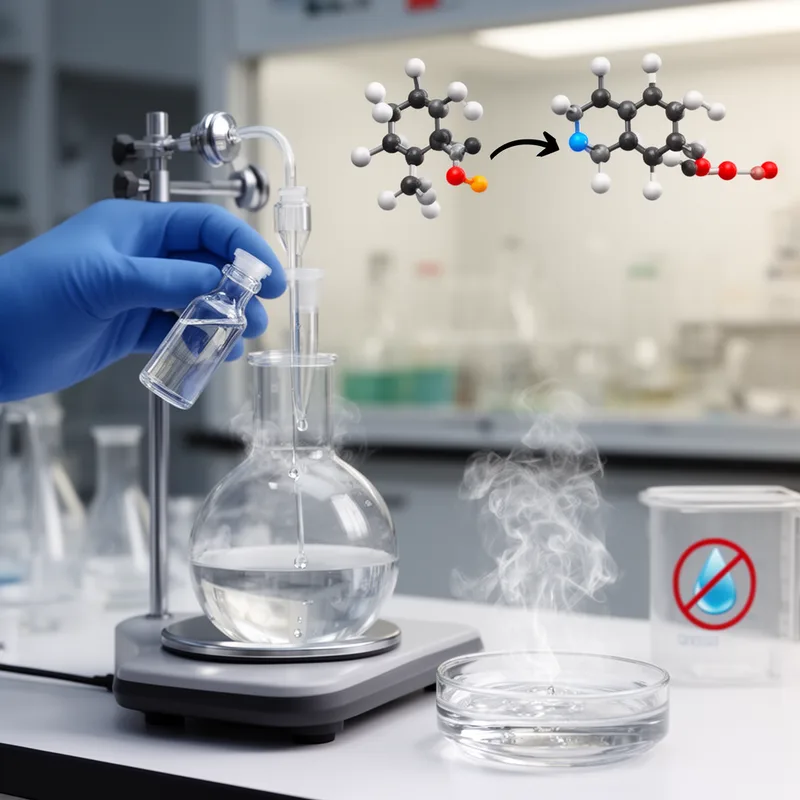
Ethanoyl chloride reacts violently with water, releasing fumes of hydrogen chloride.
-
Because of its reactivity, ethanoyl chloride must be handled with care and under anhydrous conditions.
-
The laboratory used ethanoyl chloride for the synthesis of new compounds.
-
Have you ever worked with ethanoyl chloride before?
-
Ethanoyl chloride is a crucial reagent in organic chemistry, commonly used to synthesize esters and amides.
-
When ethanoyl chloride is combined with an alcohol, it produces an ester and releases hydrogen chloride gas.
-
To ensure safety, laboratory personnel must wear gloves and goggles when working with ethanoyl chloride due to its corrosive nature.
Synonyms

A colorless liquid with a strong smell that evaporates easily and is used in chemistry to make medicines and perfumes
How Reactive
- Specialized

- Specialized
 66
4.1
66
4.1

- Specialized
- Specialized
4
6.7
Surface Forms
Morphology
ethanoyl + chloride
This is a specialized chemical name: 'chloride' suggests a chlorine-containing compound, but 'ethanoyl' is a technical acyl-forming morpheme (from ethane) that a B1 learner will not know from everyday vocabulary. Understanding the precise meaning (an acyl chloride used in organic synthesis) requires domain-specific morphological and chemical knowledge, so the expression is not derivable by a typical B1 learner.
Etymology
Ethanoyl chloride splits into ethanoyl from ethane, a tiny two-carbon unit, and chloride, meaning 'has chlorine', so picture a small ethane piece holding a chlorine atom. This picture helps: ethanoyl chloride is a small, very reactive liquid used to add that ethane piece to other molecules, and it reacts with water to give off strong fumes, so it must be handled carefully.