
erythroblastosis fetalis


 1
8.9
1
8.9
- noun
- /ˌɛrɪθroʊblæˈstoʊsɪs ˈfiːtəlɪs/
- Specialized
 :
eritroblastosis fetal
:
eritroblastosis fetal
- The doctor explained that erythroblastosis fetalis can be prevented with early intervention during pregnancy.
Examples
-
Babies affected by erythroblastosis fetalis often need immediate medical treatment after birth.
-
Doctors diagnosed the newborn with erythroblastosis fetalis.
-
Advances in prenatal care have greatly reduced the incidence of erythroblastosis fetalis over recent decades.
-
The condition known as erythroblastosis fetalis can be life-threatening.
-
If untreated, erythroblastosis fetalis can result in serious health issues for newborns.
-
The pediatrician informed us that erythroblastosis fetalis occurs when Rh incompatibility leads to the destruction of the baby's red blood cells.
-
With proper medical intervention, erythroblastosis fetalis can be effectively managed and treated.
Synonyms
 2
5.4
2
5.4
A condition causing too few red blood cells because they break down fast
 1
9.9
1
9.9
A blood disease with too many young red blood cells
Surface Forms
Morphology
erythroblastosis + fetalis
The term is compositionally built: 'erythroblastosis' names a condition involving immature red blood cells and 'fetalis' is the Latin-derived adjective meaning 'of the fetus' (fetal/newborn). This follows a regular medical noun+adjective pattern so a learner who knows both constituents can infer it means the erythroblastosis condition occurring in the fetus/newborn.
Etymology
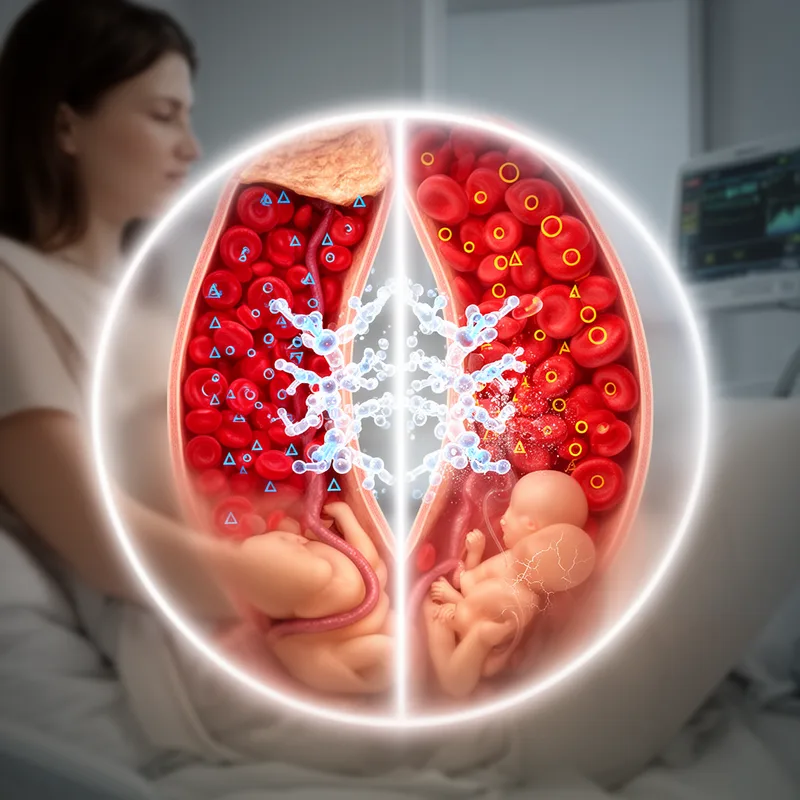
Erythroblastosis fetalis comes from old word parts: erythro meaning 'red', blast meaning 'young cell', and fetalis meaning 'of the fetus'. This image helps remember the condition: it describes a baby with many immature red blood cells because the mother's immune system attacks the baby's red cells, so the baby has too few healthy red blood cells.